
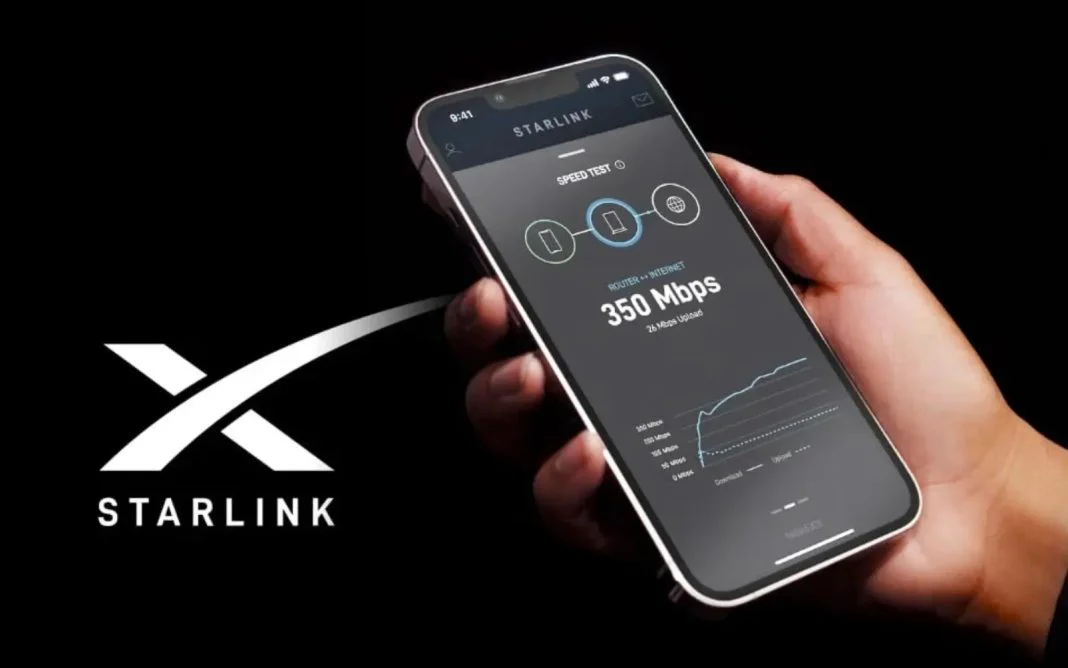
Starlink has proposed a trial of its direct-to-device satellite technology in Malaysia that could deliver mobile internet to phones without telecommunications towers, Communications Minister Fahmi Fadzil said.
Fahmi said Starlink representatives met him to present the technology, which allows ordinary smartphones to connect directly to satellites in low Earth orbit. “This would mark a significant technological leap if implemented, as it means internet connectivity could be provided via satellite in certain areas where there are no telecommunications towers or where the population is too sparse to justify such infrastructure,” Malay Mail reported Fahmi as saying on 30 July.
He said the MCMC had been instructed to invite local telcos to meet Starlink and explore deployment opportunities. The technology could offer a faster, more cost-effective alternative to building towers, which typically take 18 to 24 months to complete.
The proposal comes as Malaysia’s connectivity gaps persist in rural and remote areas. As of late 2025, 5G covered 82% of the country but only 62% of Sarawak and 69% of Sabah, according to FMT. In Julau, Sarawak, just 58% of populated areas had 4G coverage as of June 2025, the communications ministry told Parliament.
Starlink, which has held a Malaysian licence since July 2023, already operates a satellite broadband service with over 10,000 satellites in orbit serving roughly 12 million customers across 164 countries. Its D2D technology differs in that it requires no dish or special hardware, connecting directly to existing 4G phones for messaging and light data.
The model has an international precedent. T-Mobile’s T-Satellite service in the United States, powered by Starlink, launched in July 2025 and delivers messaging and app data to around 60 phone models for US$10 (RM41) a month. T-Mobile reported losing no customers to SpaceX, retaining its subscriber base while selling coverage no tower network could match.
Where fibre reaches, satellite cannot compete. Unifi sells 100Mbps fibre from RM89 a month, CelcomDigi from RM99, and Time offers a full gigabit for RM199. But no fibre operator can economically serve remote villages, longhouses or offshore locations. The communications ministry has set a target of 100% internet access in populated areas by 2027 under the Jendela plan, though the hardest coverage gaps will be the slowest and costliest to close through traditional infrastructure alone.