
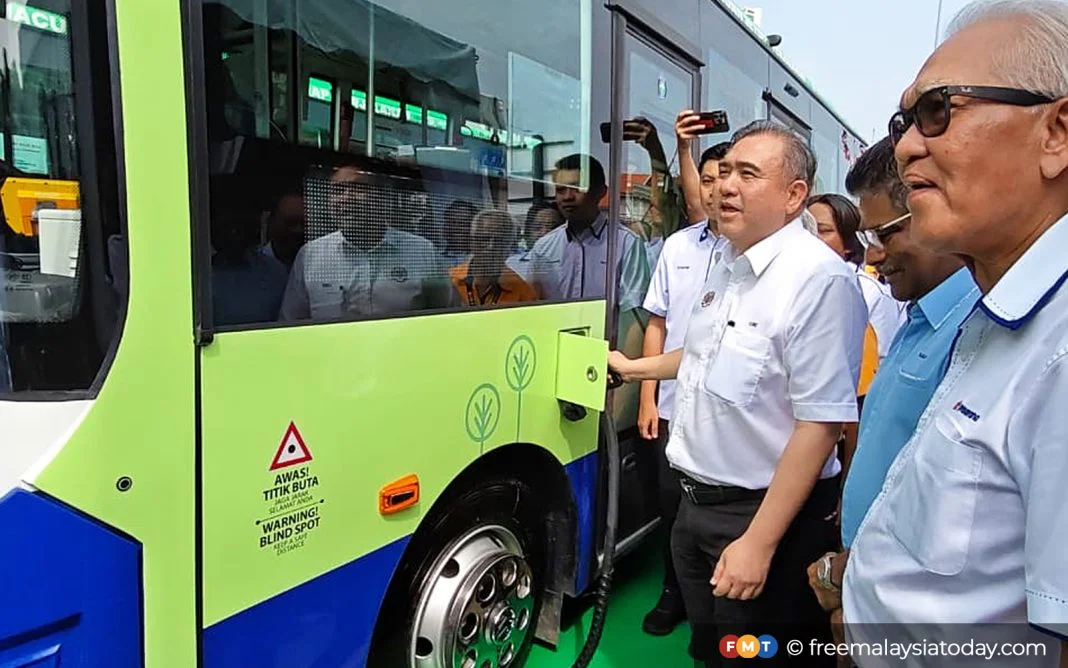
Rapid Penang began running its first 15 electric buses today, the opening step in the operator’s shift away from diesel.
The first batch has 14 buses measuring 8.25 metres and one measuring 12 metres. Transport minister Loke Siew Fook said the shorter vehicles handle the island’s narrower roads and denser neighbourhoods more easily.
A first procurement phase covers 250 electric buses at a cost of RM200 million, with 175 allocated to Rapid KL and 75 to Rapid Penang, according to FMT. Of that total, 150 buses arrive in the first phase and another 100 in the second phase early next year.
Under the first delivery stage, Rapid Penang receives 40 buses and Rapid KL 110 buses. Deliveries began in June and should finish by 31 December. The second stage adds 35 buses for Penang and 65 for Rapid KL, with deliveries starting in January and ending by March 2027, Malay Mail noted.
“There will be new buses arriving every month to complete Rapid Penang’s fleet of 75 buses by March next year,” Loke said at a press conference after the launch at the Rapid Penang depot.
As of 13 Oct, Rapid Bus had received 52 electric buses, with 37 units for Rapid KL and 15 for Rapid Penang. That leaves 198 units from the first procurement phase still to be delivered, and 60 more buses before Penang’s own fleet reaches 75.
“This marks a new era for Penang’s public transport system, with buses that are more environmentally friendly and quieter,” Loke said.
Charging support stands ready at the depots. Loke said 150 charging units have been installed at nine depots, including three in Penang. Another 100 units are planned at six depots, two of them in Penang, for the second delivery stage.
The buses carry two driver assistance features. An Advanced Driver Assistance System alerts bus captains, while an Acoustic Vehicle Alerting System produces external warning sounds for pedestrians and other road users at low speeds.
Loke warned that the quieter operation may catch pedestrians out. He urged the state government and local authorities to factor the near-silent approach into traffic management and walkway planning, particularly in areas with heavy foot traffic.
The rollout forms part of Prasarana Malaysia Berhad’s plan to acquire 1,600 electric buses between 2026 and 2031, replacing part of the diesel fleet across Rapid Penang and Rapid KL. Two bus lengths, 12 metres and 8.25 metres, will cater to different traffic conditions and passenger loads.
Looking ahead, Loke said Rapid Penang must support the Mutiara Line LRT. “Rapid Penang, as the stage bus operator in Penang, must play a supporting role to ensure first- and last-mile connections are improved and complement this transport system,” he said.