
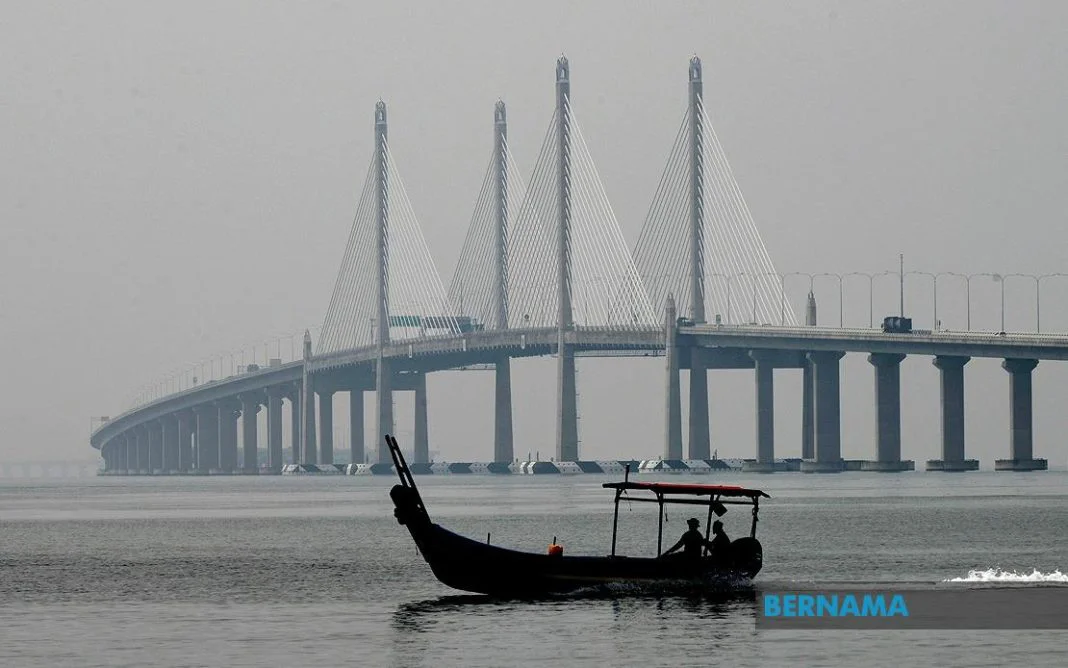
Penang will hold discussions next week to find a balanced approach to enforcing the fishing ban under the Penang Bridge and the Sultan Abdul Halim Mu’adzam Shah Bridge.
Penang Rural Development, Agro-technology and Food Security and Entrepreneurship Committee chairman Datuk Rashidi Zinol said the matter would be examined, taking into account safety, regulations, and the livelihoods of the affected community.
“The issue was raised by tourist boat and fishing boat operators during a meeting with me recently. They voiced several concerns following the enforcement,” Rashidi told Bernama when contacted on 21 August.
He said the operators claimed the fishing ban under both bridges had directly affected fishing activities, resulting in lower demand for fishing and tourist boat services. FMT reported that last month, the coastguard cleared out popular angling spots around both bridges.
The areas under the Penang Bridge and the JSAHMS, also known as the Second Penang Bridge, have been gazetted as restricted areas and prohibited places under the Protected Areas and Protected Places Act 1959 (Act 298), and classified as National Key Points.
Rashidi said the impact extended beyond boat operators to businesses in the wider supply chain, including fishing equipment and supplies, ice, food and other small businesses.
Under the current restrictions, a 250-metre buffer zone on each side of both bridge structures is off-limits. Individuals violating the prohibition face a maximum jail sentence of two years, a fine of up to RM1,000, or both under Section 7 of Act 298. Offenders may also face investigation under Section 447 of the Penal Code for criminal trespass.
Three anglers were detained on 4 August for allegedly fishing beneath the Penang Bridge. Penang MMEA director Kapt Muhammad Suffi Mohd Ramli said the waters beneath the bridge were gazetted as a Protected Area and Protected Place in 2011, with the same designation extended to the Second Bridge in 2014. Security measures were further tightened in 2020 with the introduction of the buffer zone.
Rashidi said he would discuss the matter with the relevant parties to seek a balanced approach that safeguards safety and regulatory compliance while taking into account the livelihoods of boat operators and related businesses.