
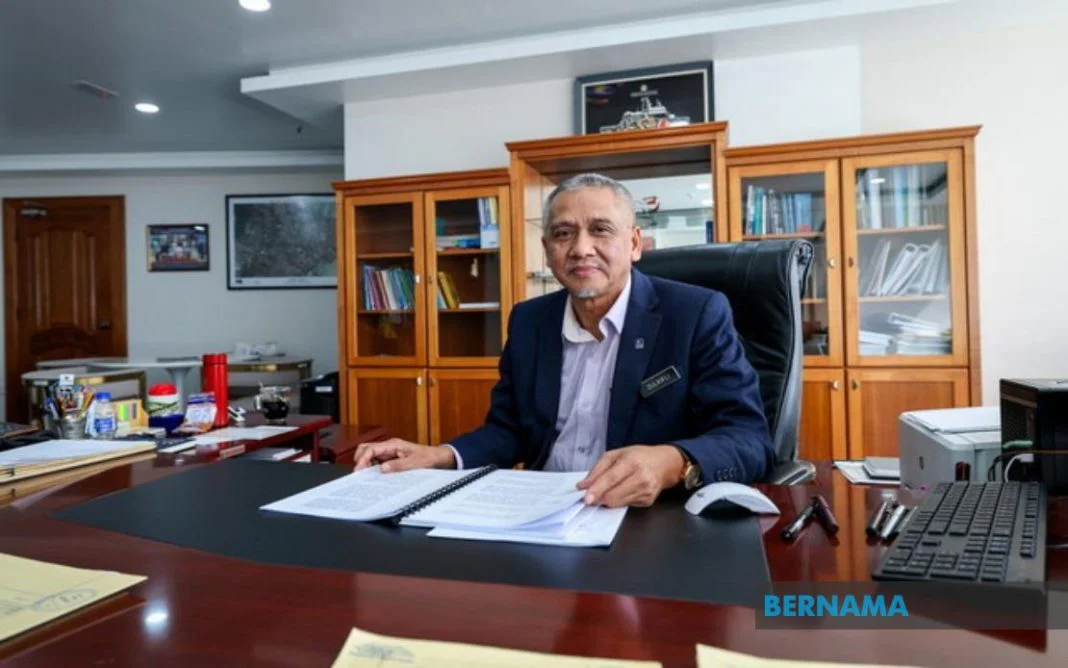
After more than 28 years in public service, Penang State Secretary Datuk Seri Zulkifli Long will conclude his tenure tomorrow, leaving behind reforms that cut development process approval times by two-thirds and saved the state billions in compliance costs. In an exclusive interview with [Bernama](https://www.bernama.com/en/general/news.php?id=2588880), the 60-year-old traced the origin of the Bureaucratic Red-Tape Reform (RKB) to a personal experience of frustration at a district office.
Zulkifli, 60, introduced the RKB during his time leading the state administration. The initiative shortened approval periods for development processes from 108 days to around 36 to 38 days.
The RKB also delivered compliance cost savings exceeding RM2.4 billion for completed projects to date.
The reform was born from personal frustration. Zulkifli recounted how, despite understanding land administration processes, he received poor treatment while trying to settle a matter involving his late mother-in-law’s land at a district office.
“It was only after the officer on duty found out who I was that the process became easier,” he told Bernama. “The experience left a deep impression on me.”
That experience drove him to change the system. He introduced a work approach centred on “volume, security and speed” to increase productivity, uphold integrity and speed up service delivery.
Under his leadership, Penang achieved a historic milestone when state government revenue surpassed RM1 billion for the first time in 2025. The state recorded a surplus of almost RM200 million despite the budget being tabled with an expected deficit, driven by higher revenue collection and more disciplined expenditure control.
Zulkifli also revised the land tax rate, which had not been reviewed since 1994, calling it a tough but necessary decision to ensure a fairer system that reflected current values.
His career took him from the Penang Islamic Religious Department, where he started after obtaining a Bachelor’s Degree in Economics from the International Islamic University Malaysia, through various roles at the district office, the State Economic Planning Unit and the Land and Mines Department.
Zulkifli was sworn in as Penang State Secretary on 11 September 2024.
Beyond reforms, he managed crisis responses including post-tsunami operations in 2004, the 2017 Penang floods and several landslides.
Chief Minister Chow Kon Yeow praised Zulkifli’s leadership, saying various high-impact projects were successfully planned and carried out under his watch.
“On behalf of the state government and the people of Penang, I would like to express my deepest appreciation and gratitude to Zulkifli for his years of service, sacrifices and dedication towards the progress and well-being of the state,” he said.
Zulkifli said the biggest challenge was not introducing new systems but changing the work culture among nearly 8,000 state civil servants, which required time and patience to shift mindsets and attitudes.
“Even if it is not easy, we should always try to make things easier for people,” he said.
Looking ahead, Zulkifli plans to spend more time with his wife, two children and a grandchild. He is also considering writing a book to document his career.
Asked about joining politics, he said he was more comfortable working within the framework of procedures and the law.