
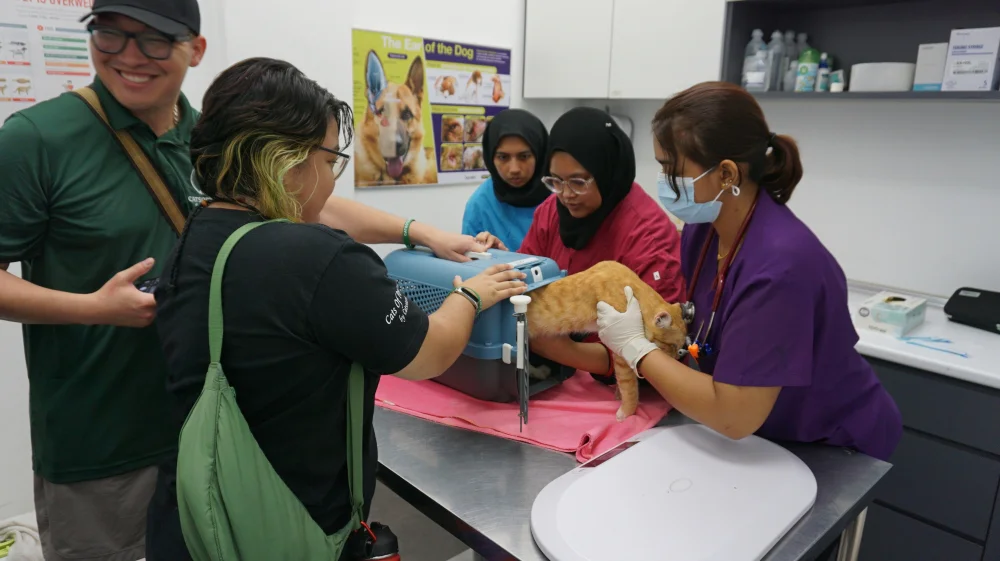
A volunteer-driven initiative in Penang has sterilised nearly 800 stray cats since 2025, preventing an estimated 7,116 kittens from being born on the streets. The programme, run by Catsoterra Berhad, operates through a network of 77 volunteers who trap, transport, and monitor stray cats before returning them to their neighbourhoods.
According to Malay Mail, the organisation subsidised more than RM50,000 worth of Trap-Neuter-Return (TNR) services as of 8 July. Volunteers pay an annual RM60 membership fee, which gives them access to an online dashboard to book sterilisation appointments at partner clinics. Catsoterra covers the base cost of each procedure.
What sets Catsoterra apart from traditional animal shelters is its focus on population control rather than rescue. Founded by Daniel Lok Chin Leung, a respiratory therapist from Hong Kong now based in Maryland, the United States, the initiative started as Cats of Penang in April last year before being formally incorporated as Catsoterra Berhad in November.
“After being involved in animal welfare for a long time, I’ve learned that the mission has to remain the driving force behind every decision,” Lok said in an interview with Malay Mail. “I believe running a nonprofit should be approached with the same discipline, strategy, and accountability as running a business.”
The system works through a custom-built dashboard that connects volunteers with partner veterinary clinics. Volunteers trap stray cats, schedule appointments online, and manage the entire TNR process from their phones. Catsoterra handles the sterilisation costs while volunteers bear additional expenses such as medication or treatment for sick animals.
One such volunteer is Fouziah Omar, a 57-year-old assistant manager from Butterworth. She makes at least 30 stops daily to feed stray cats across food courts, hawker centres, and wet markets, spending about RM2,500 a month on feeding and caring for 40 cats she has taken in as well as the strays she encounters. Since joining Catsoterra in April, she has brought in 29 cats for sterilisation.
“It is not easy to capture stray cats,” she told Malay Mail. “Some will take months for them to get used to you before you can even go near them to trap them.”
In Bayan Baru, 35-year-old office worker Ben Chan feeds stray cats around the market complex at night. He estimates about 50 stray cats in the area alone. A single female cat can produce more than 15 kittens across three litters, he said, making sterilisation critical to controlling the population.
Catsoterra’s target is 1,000 sterilised cats. Once reached, Lok plans to shift focus to improving the system and expanding capacity. He chose Penang for the programme because of its island geography, clear boundaries, and existing TNR foundations established by local NGOs.
“No place is perfect, but Penang has a certain charm — and, from an animal welfare perspective, it is also a meaningful place to begin,” Lok said.
The organisation is now marketing its dashboard as a product to generate revenue and reduce reliance on personal funding. Lok said the long-term goal is to build a sustainable model for stray cat population management that can be replicated beyond Penang.
“Every statistic represents the efforts of ordinary people choosing to make a difference for animals in their communities,” he said.