
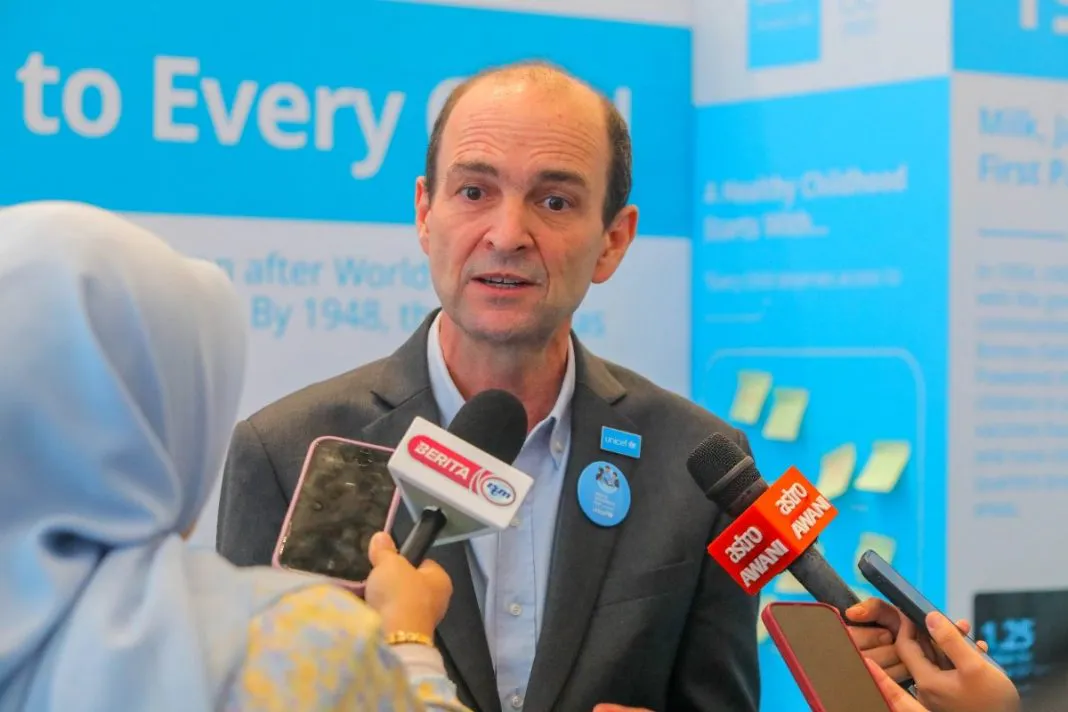
Penang and Kuala Lumpur are expected to become candidate cities under UNICEF’s Child Friendly Cities Initiative, joining seven Sarawak municipalities already in the programme, UNICEF Malaysia representative Robert Gass said on 20 November, The Sun Malaysia reported.
Gass spoke to reporters after opening the Festival of Rights at KLGCC Mall in Kuala Lumpur, a two-day event marking World Children’s Day, according to Bernama. He pointed to Petaling Jaya, which he said became the first city in Southeast Asia to receive UNICEF’s child friendly accreditation.
Penang Island signed a memorandum of understanding with UNICEF on 13 February 2025, Kuala Lumpur City Hall followed on 14 August 2025 and Kota Kinabalu on 6 May 2025, records UNICEF Malaysia. Candidate status follows the agreement, with recognition as a child friendly city coming only after a city delivers its action plan.
Under the initiative, UNICEF supports participating local authorities with an assessment that maps gaps in facilities, services and policies affecting children, while asking children directly about their concerns.
“For example, some children say they do not feel safe walking to school because there are no proper pathways. They worry that cars might hit them,” Gass said.
“Other children are concerned about vaping near schools, where vape products are being sold and they are exposed to them even when they do not want to.”
UNICEF would then bring city officials, government representatives and urban planners together to review the findings. That review would identify which agencies are responsible, how funding is allocated and which indicators measure progress, he added.
Seven Sarawak councils already hold candidate city status, and Gass said more local authorities across Malaysia were expressing interest because a city built around children also suits older residents. The network spans more than 40 countries.
He welcomed support from Minister in the Prime Minister’s Department (Federal Territories) Hannah Yeoh in drawing more councils into the initiative. In a meeting last August, UNICEF sought her help in extending it to other federal territories, including Putrajaya.
On children’s rights more broadly, Gass said Malaysia had made “tremendous progress” in education, healthcare and laws against sexual abuse and online sexual exploitation. Those gains have not reached every child equally.
“There has been a lot of progress in terms of protecting children’s rights, but it is not reaching children equally,” he said. “There are still many children who are being left out.”
He listed three areas needing attention: fairer access to rights, more investment in children and stronger accountability so that policies turn into action. Malaysia’s review under the Convention on the Rights of the Child this year raised the same points.
World Children’s Day marks the adoption of the Convention on the Rights of the Child in 1989, which Malaysia ratified in 1995. Gass also cited Article 12 of the convention, which recognises a child’s right to express views and have them taken into account.