
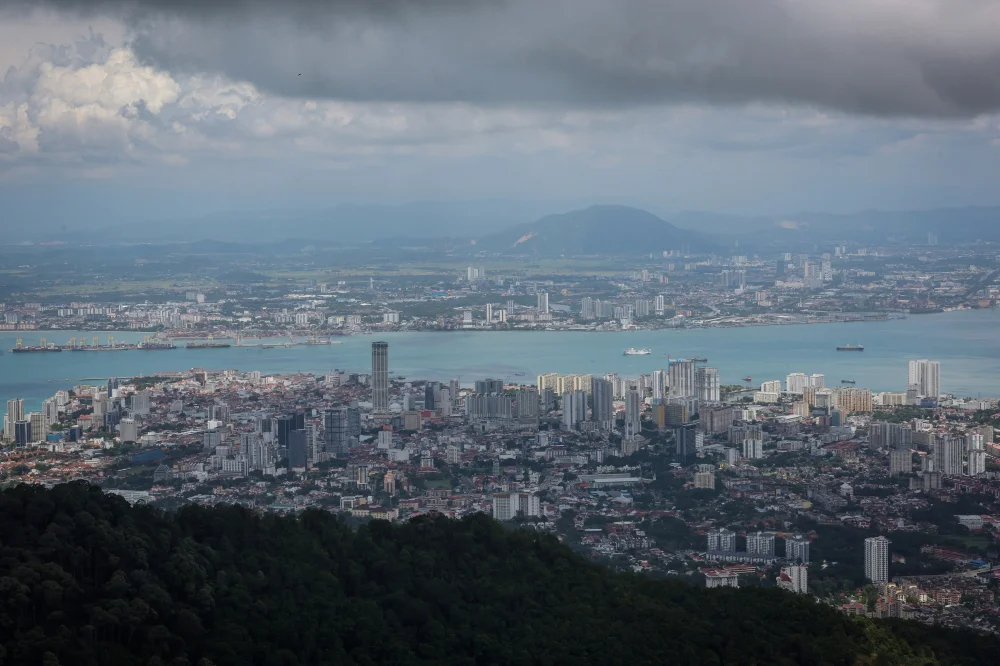
Penang has been named the world’s most budget-friendly city for digital nomads, topping a study of 26 cities across 15 countries that weighed monthly living costs against internet access, safety and visa options.
The ranking, by digital marketing agency Click Intelligence and published in Moneywise, placed Penang first with a score of 0.78 (Malay Mail). Busan in South Korea came second on 0.72, followed by Kuala Lumpur on 0.59, while Fukuoka and Seoul took fourth and fifth place.
The rest of the top 10 was Tartu in Estonia, Chiang Mai in Thailand, Valencia in Spain, Osaka in Japan and Brno in the Czech Republic. Penang’s estimated monthly cost of living, rent included, came to €850 (about RM3,860), the lowest all-in figure of any city compared (NST).
Rent carries the largest share of that bill. A one-bedroom near the city centre goes for €393, which leaves €457 for everything else in the month (TyN Magazine). Malaysia’s national figures lifted the score: 98.02 per cent of the population is online, fixed broadband runs at 14 subscriptions per 100 people, and the intentional homicide rate sits at 0.73 per 100,000.
Click Intelligence scored each city on four measures. The first was the all-in monthly cost of living for one person, rent included. The others were how widespread home broadband and everyday internet use are nationally, each country’s intentional homicide rate, and whether it runs an official nomad or remote-worker visa.
Malaysia answers that last measure with the DE Rantau Nomad Pass, which lets eligible remote workers stay for 12 months with an option to renew. Click Intelligence co-founder and director James Owen said language was rarely an obstacle because English is widely spoken across the island, adding that Malaysia was generally regarded as a safe country to live in.
Owen argued that a cheap rent figure tells a remote worker only half the story. What decides whether a place works, he said, is the full month: how much of an income goes on day-to-day costs, whether the internet holds up through a long video call, and whether a person can stay legally without crossing borders every few weeks.
The study’s city list leans on Southeast Asia and East Asia. Penang’s €850 a month is the lowest of the 10 published, with Chiang Mai the closest at €858 and Kuala Lumpur at €1,100. Seoul, in fifth place, came in at €1,764, more than double the island’s figure.
Penang Tourism and Creative Economy Committee chairman Wong Hon Wai said the recognition reflected the state’s growing appeal as a destination of choice for digital nomads and international visitors. “Penang offers more than just an affordable cost of living,” he said.
He pointed to the state’s Unesco World Heritage status, its multicultural heritage, food, arts and creative scene and natural attractions as reasons the island suits people who want to live, work and explore. Wong said the result also reinforced the state government’s push to strengthen tourism and the creative economy. “Penang has the lifestyle, culture and opportunities that international visitors and digital nomads are looking for,” he said.
A digital nomad is a professional who is not tied to one location and uses the internet and digital technology to work remotely while travelling. For Penang, the ranking puts a cost-of-living story and a tourism pitch in the same frame: the island’s selling point is no longer only what a visitor can see in a week, but what a remote worker can afford across a year.