
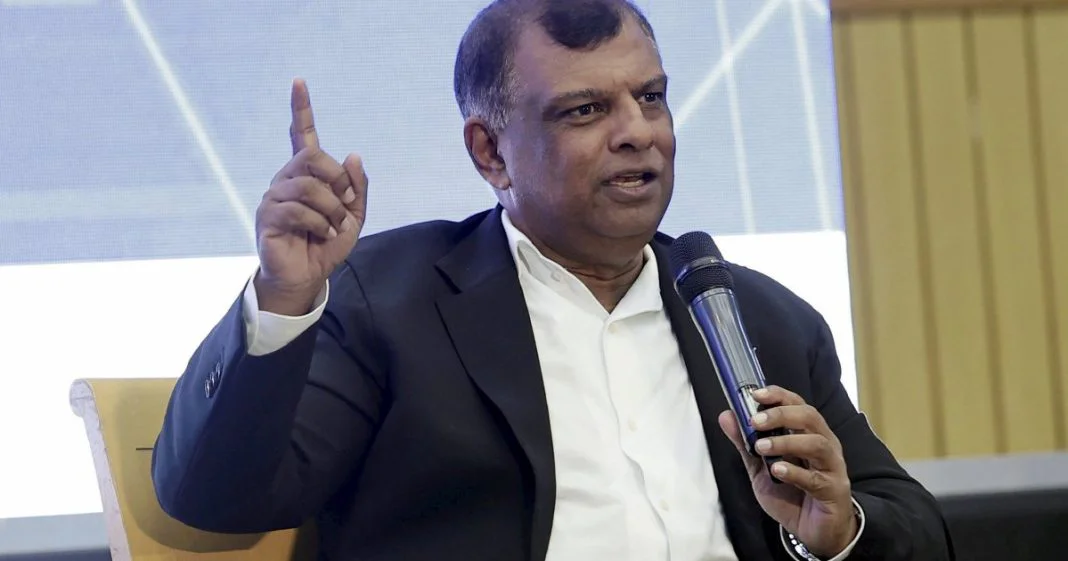
AirAsia co-founder Tan Sri Tony Fernandes has dismissed as “irresponsible” a Reuters report claiming the Malaysian government had approached rival carriers about taking over the budget airline’s domestic routes, calling it “the most ludicrous statement I have seen in 25 years.”
Fernandes made the remarks at a hastily arranged press conference in Bangkok on Friday, 18 September, after the wire service reported that authorities had asked Malaysia Airlines and Batik Air whether they could absorb AirAsia’s domestic market share. The report, published on 16 September, cited two unnamed sources “with knowledge of the matter” who described the outreach as scenario planning while officials monitored the carrier’s financial health, CNA reported.
“Nothing, nothing, we are not getting anything from the government. I don’t know where this story comes from,” Fernandes told reporters. “My top sources said no such conversations happen. Kill it already. We do not need rescuing or bailouts whatsoever.”
The report landed at a sensitive time. AirAsia Group Bhd posted a net loss of RM831 million for the second quarter ended 30 June, driven by a 58 per cent year-on-year surge in fuel expenses. Average jet fuel prices reached US$183 a barrel in the period, fuelled by the US-Israeli conflict in the Middle East. Excluding a non-cash foreign exchange loss of RM331 million, the net loss would have been RM499.6 million.
Fernandes argued that any rival attempt to replace AirAsia’s roughly 100 domestic aircraft would need to match the carrier’s cost structure, brand recognition, market reach, and interlining capabilities. “You cannot just replace an airline,” he said, adding that the market underestimates the operational scale AirAsia commands in the Asean low-cost aviation sector, The Edge Malaysia reported.
The carrier has been restructuring aggressively. It cut seat capacity by 20 to 25 per cent in the third quarter, returned 25 older aircraft to lessors, and renegotiated vendor contracts to lower costs. It also suspended underperforming long-haul routes and delayed the launch of a planned hub in Bahrain. Group CEO Bo Lingam said the airline had recovered around 70 per cent of fuel price increases through real-time fare adjustments and lower non-fuel operating costs.
AirAsia said in a statement that its “resilient low-cost model, combined with strategic fare optimisations and ancillary revenue growth, positions it to absorb these industry-wide pressures.” The airline expects to ramp capacity back towards pre-war levels in the fourth quarter, in line with the region’s peak year-end travel season.
Fernandes said the second quarter of 2026 marked the toughest period for AirAsia but forecast improving conditions ahead. “We have been through many crises before in our 25-year journey, with COVID-19 being by far the most challenging,” he said. “We’ve never received any government support in the last 25 years.”