
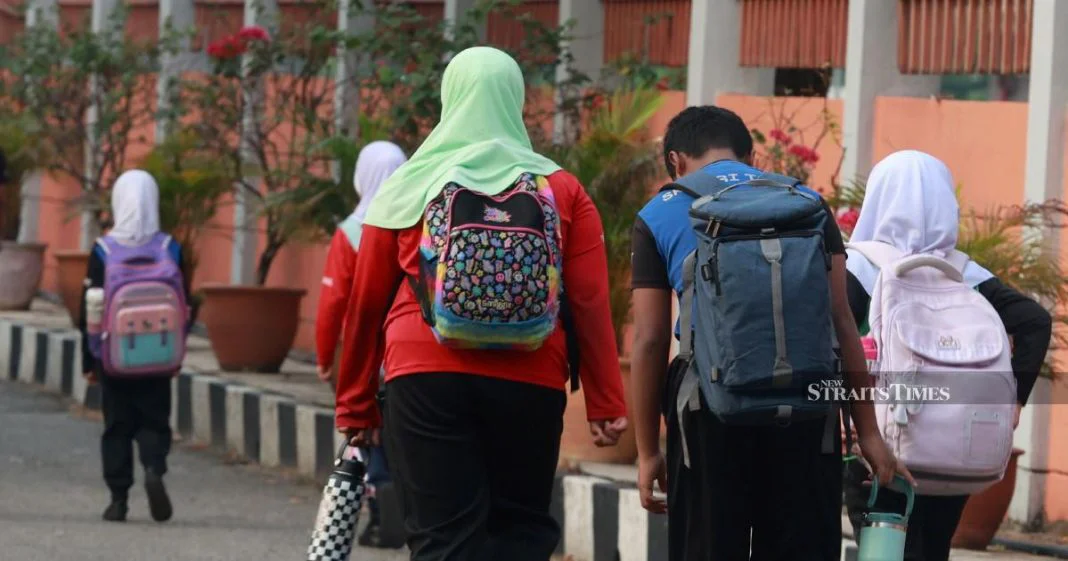
Parents and school groups across Malaysia want the Education Ministry to establish a clear middle ground on haze-related school absences, arguing that leaving attendance decisions to individual families creates an uneven burden on households with different circumstances.
Education Minister Datuk Seri Fadhlina Sidek announced on 7 September that parents may keep their children home during haze without penalty, provided they inform the school. NST reported that parent-teacher association leaders said this discretion, while welcome, still forces parents to choose between health and education because schools remain open and children kept home lose class time.
SK Convent Ipoh PTA chairman Datuk Seri Razlan Yusuf proposed that optional attendance during haze be paired with home-based learning, so students kept home would not fall behind. He also called for clearer communication from schools on Air Pollutant Index readings and learning arrangements when haze worsens.
Razlan, whose children are aged 8 and 12, said schools should not need to wait for the API to surpass 200 before closing. Under the National Haze Action Plan, outdoor activities are suspended once API exceeds 100, while schools close only when readings pass 200.
The Parent Action Group for Education Malaysia (PAGE) has pushed for a graduated approach. Its chairperson Datin Noor Azimah Abdul Rahman told Scoop that giving parents discretion is “a useful safety valve but not a substitute for a national policy.”
PAGE proposed a three-tier response: no outdoor activities or assemblies at API 100, suspension of physical classes with activation of home-based learning at API 150, and full school closure with continued home-based learning at API 200. Azimah said the API 200 threshold was too high as the first trigger for suspending physical classes.
“By waiting until that level, we are effectively accepting prolonged exposure to unhealthy air before removing children from the school environment,” she said, adding that if API hovers around 140 to 160 for several consecutive days, authorities should not rely on a single threshold reading to keep schools operating normally.
Parents shared personal concerns about the current arrangement. A mother identified as Nadira said her kindergarten-age daughter, who has asthma and is under paediatric follow-up at Putrajaya Hospital, started coughing after being sent to school during a week when API in her area passed 140. She kept her daughter home once symptoms began, and the teacher told her the child need not attend when unwell.
Another parent, Normaya Othman, said she will continue sending her 8-year-old to school unless the ministry orders closure, but has restricted outdoor activities and requires her daughter to wear a mask. She said parents need clearer, more timely guidance once air quality turns unhealthy, since deciding without a clear official announcement is difficult.
SK Taman Megah PTA chairman Yuwaraj Kumar Balakrishnan said that while it is not standard procedure before official closure, given the health risks, it is better that parents be allowed to make the call based on their child’s condition. Melaka Action Group for Parents in Education chairman Mak Chee Kin said schools should be flexible when there are genuine health concerns, rather than treating every absence as truancy.
National Union of the Teaching Profession secretary-general Fouzi Singon said parents should monitor their children’s learning to ensure they do not fall behind, while cautioning that the flexibility must not become an opportunity for students to play truant or avoid learning.
The debate comes as haze continues to affect several states. As of 7 September, 40 locations nationwide recorded unhealthy API readings between 101 and 200, with Samarahan and Serian in Sarawak recording very unhealthy readings above 200, according to Bernama.