
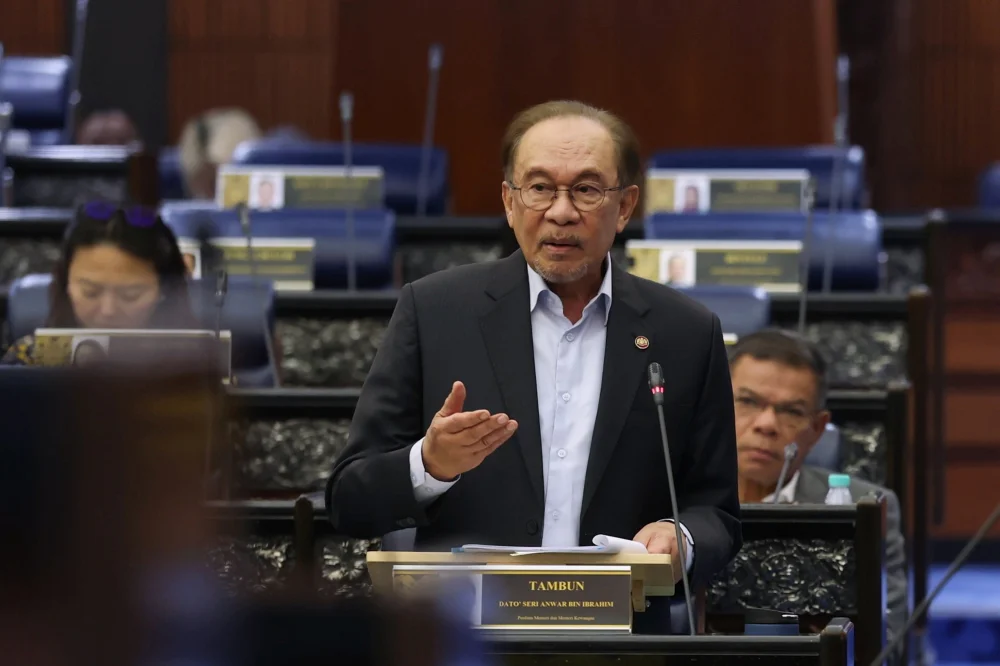
Malaysia is among the countries considered potential targets of cyberattacks, Prime Minister Datuk Seri Anwar Ibrahim told the Dewan Rakyat on 3 November, naming the country’s growing digital capacity and its position on Palestine and Gaza as the two reasons.
Answering a supplementary question from Datuk Seri Dr Ronald Kiandee (PN-Beluran), who asked whether intelligence had identified Malaysia as a target and how far the threat reached, Anwar said not every detail could be disclosed. “Malaysia is certainly among those considered a target,” he said, in an account carried by New Straits Times.
He listed attacks abroad that have shut down public systems in recent weeks. Belgium closed its national tax portal, identity records belonging to almost nine million Danes were compromised, the United States Federal Election Commission’s filing system was disrupted for 41 hours, and the personal records of more than 100,000 Japanese police personnel were exposed.
Anwar proposed that National Security Council director-general Datuk Raja Nushirwan Zainal Abidin brief all MPs behind closed doors within a day or two, subject to agreement from both sides of the House. “I believe this matter is very important because, based on information obtained yesterday evening and this morning, including from the Home Minister (Datuk Seri Saifuddin Nasution Ismail), we must not take it lightly,” he said.
He also told the House there was no need to panic. Departments and agencies were working daily to keep medicine, food and other essentials in supply, and panic would weaken the country, he noted, as The Star recorded. The National Cyber Security Agency is involved in discussions coordinated by the National Security Council, he said, and he asked the public to report any digital intrusion or system breakdown. Should the situation turn urgent, he would convene a Cabinet meeting at once instead of waiting for Friday.
The warning rests on the size of the digital build-out. Google and Nvidia have committed an estimated RM20 billion to digital infrastructure and data centres in the country, Malay Mail wrote, and Anwar said local capabilities could rival those in Europe.
A special National Security Council meeting on Monday examined digital and hybrid attacks, possible nuclear fallout from threats against Gulf states, particularly Iran, and the effect of European political change on administrative systems. Anwar set out five measures: closer coordination between ministries and agencies, better preparation against domestic and foreign threats, stronger protection for energy, transport, finance and food supply, public and community readiness, and sharper technical capability in the agencies that guard against intrusion.
The same afternoon, Chief Secretary to the Government Tan Sri Shamsul Azri Abu Bakar was to chair a meeting with relevant departments, while Bank Negara Malaysia governor Datuk Seri Abdul Rasheed Ghaffour convened a special session with financial institutions.
Anwar said Putrajaya is also watching the Middle East conflict, Yemen and the Red Sea. He noted that the European Union, Canada and Japan have advised citizens to keep food stocks for between three and 10 days.
Closer to home, police are investigating the hacking of eight LED screens belonging to the Kluang Municipal Council, which broadcast obscene content, Kluang police chief Asst Comm Bahrin Mohd Noh said last Friday. Anwar said the government is monitoring the situation daily.