
Water treatment plant residue, once classified as scheduled waste destined for landfills, is now being turned into commercial cement bricks in Penang. The project is a collaboration between Alam Aliran Kualiti (M) Sdn Bhd (AAK) and the Penang Water Supply Corporation (PBAPP).
According to NST Online, PBAPP is the first water operator in Malaysia to adopt a circular economy model for managing water treatment plant residue, while AAK is the country’s first facility to process the material, known as SW204, into brick raw material.
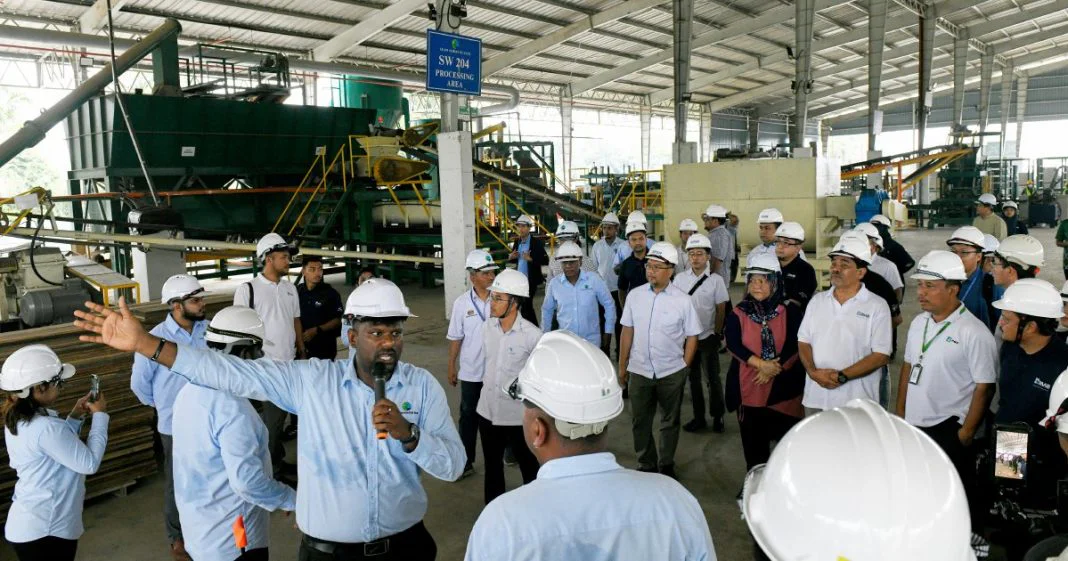
AAK project head G. Karthigayan told Malay Mail that the process begins at the Sungai Dua Dewatering Plant, where residue undergoes belt press dewatering to separate water from solids. The recovered water returns to PBAPP’s supply system, while the remaining alum sludge moves to AAK’s brick facility in Bukit Minyak.
At the factory, the sludge undergoes chemical treatment to produce aggregates used as the primary raw material for cement bricks. Karthigayan said the technology recovers about nine million litres of water per day that would otherwise be discharged into the river, enough to supply 10,000 to 12,000 households.
Tests showed the bricks offer better fire resistance than conventional cement bricks. The plant can produce up to 150,000 bricks daily, with current output between 70,000 and 100,000 depending on sludge supply. The bricks are already commercialised and sold through hardware stores across Penang.
The technology was developed over nearly five years of research and development. The product holds ISO 9001 certification and is undergoing certification by Sirim and the Fire and Rescue Department. The project runs under a 15-year design, build, operate and maintain contract, with AAK bearing all capital costs.