
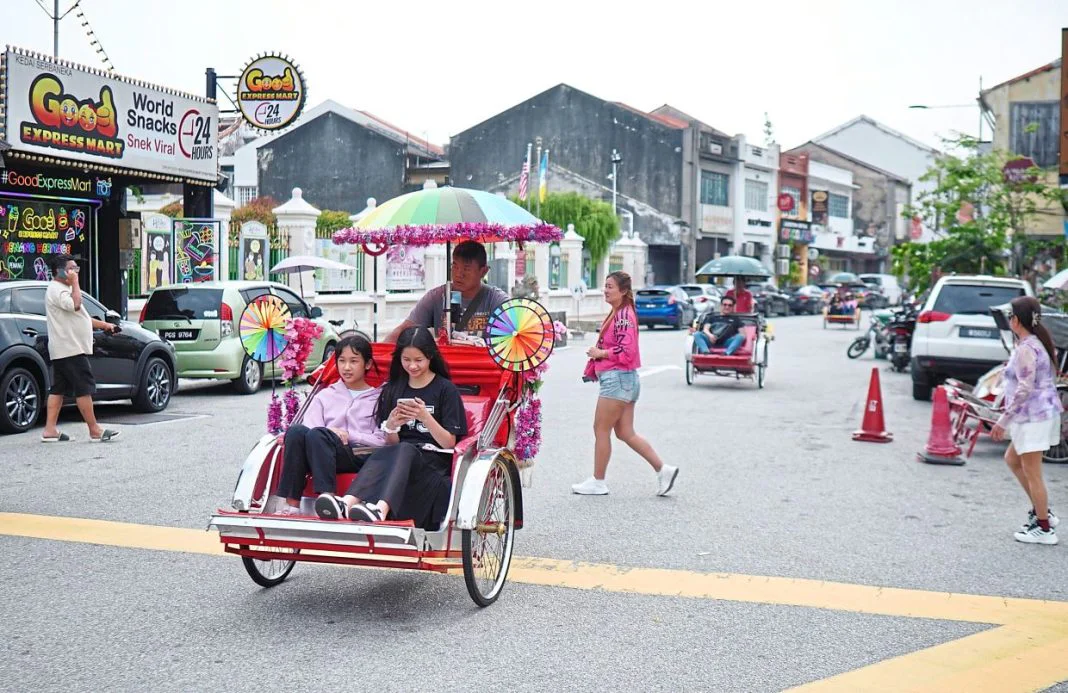
Trishaw riders in George Town may soon have to follow stricter traffic rules as the Penang Island City Council (MBPP) works on new bylaws to address mounting complaints over their conduct on the road.
MBPP mayor Datuk A. Rajendran said a study is underway to determine designated routes for trishaws, including restricting them to selected areas and keeping them off major roads with higher speed limits.
“They pose issues to traffic because they travel slowly, ride against the flow of traffic and sometimes occupy entire lanes.”
“We need to restrict them to certain areas and avoid major roads where traffic is heavier and vehicles travel at higher speeds,” he said after the MBPP full council meeting at City Hall on 26 June.
He stressed that the council was not seeking to phase out trishaws, which remain an important part of Penang’s tourism and cultural heritage.
“We want them to continue operating, but with proper regulations and safety measures in place.”
“The study, which is being carried out under the local plan, includes identifying designated routes. We hope to have the framework in place by the end of the year.”
MBPP enforcement department director Noorazrein Noorazlan Ong said the council had received numerous complaints in recent years about trishaws obstructing traffic.
“Our enforcement teams have found many instances of trishaws blocking roads and disrupting traffic flow.”
“At the moment, our only option is to politely ask the riders to move elsewhere.”
Noorazrein said existing bylaws only regulate trishaw licensing and do not address traffic-related offences.
“This issue has also been raised by the police, which is why the study is being carried out.”
MBPP councillor Foo Yu Keong said the objective was not to restrict the trishaw industry, but to preserve the heritage trade in a more organised, professional and safer manner.
Among his proposals were a periodic licence renewal system based on compliance with operating conditions, standardised fares or a transparent fare display for tourists, and designated routes or operational zones to minimise conflicts with other road users.
Source: The Star