
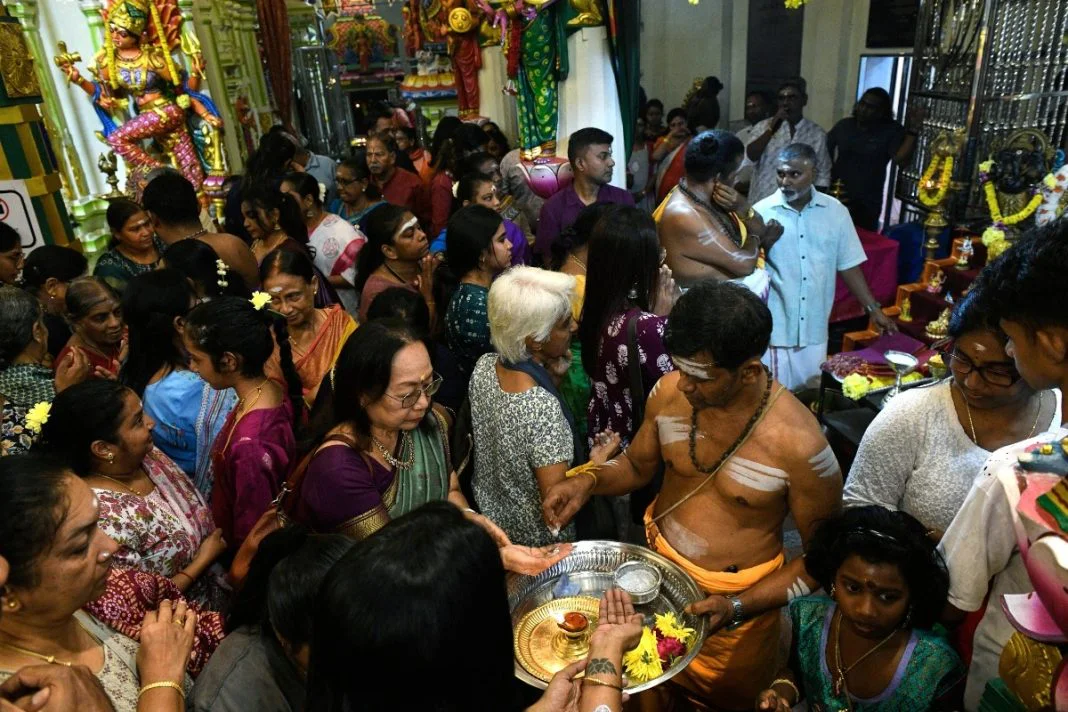
Penang’s food shops went meat-free for nine days this month, and two faiths did it at once. The Nine Emperor Gods Festival and Navarathiri ran side by side across the state, each asking devotees to give up meat for the duration.
The Nine Emperor Gods Festival was observed by the Chinese community from 10 to 18 Oct, while Navarathiri ran for Hindus from 11 to 20 Oct, according to The Sun. The overlap put a wide spread of meat-free food on sale at once, from temporary food fairs to established vegetarian outlets.
For both communities the diet is not a food trend. It sits inside the observance itself: prayer, restraint and spiritual discipline, with vegetarianism the practice both faiths share.
Chiang Lee Sian, a 29-year-old private school teacher, said the Nine Emperor Gods Festival carries weight for the Chinese community and that going meat-free for nine days is part of it. “It is very easy to find vegetarian food in Penang, with so many choices available,” she said at the food fair in Lorong Madras.
Meenashaki Thuraisingam, a 46-year-old housewife who travelled from Kuala Lumpur, said the two festivals usually fall close together, but this year they landed in the same week. She said the spread of vegetarian dishes in Penang is what draws her to the stalls.
The fair in Lorong Madras has run since 1993, with 50 stalls this year selling meat-free versions of local and Western favourites, among them vegetarian bak kut teh, Hokkien mee, satay, burgers and pizza, The Star noted. Committee secretary Tan Kean Guan, 60, said most hawkers come back each year and that visitors arrive from Indonesia and Europe. Dishes cost about RM3 to RM4 more than on ordinary days, a premium regulars say they accept once a year.
State Tourism and Creative Economy Committee chairman Wong Hon Wai said the overlapping celebrations show how the state’s multicultural identity carries through its people, traditions and religious practices. “Penang’s vegetarian food deserves to be recognised as more than a dietary choice. It is a culinary heritage,” he said. He added that the festivals open business for vegetarian restaurants, hawkers, food vendors, cafes, hotels, retailers and tourism operators, and that the wider gain comes when a temple visit turns into a full day of food, heritage streets and shopping.
Both festivals last nine days and follow lunar calendars, which is why they often land near each other. The Nine Emperor Gods Festival is a Taoist celebration welcoming nine celestial deities, observed at temples including Tow Boo Kong Temple in Butterworth. Navarathiri, which means nine nights, honours the goddess Durga and her nine manifestations, with Sri Maha Mariamman Temple on Queen Street a focal point for prayers in George Town.
Strict devotees go further than skipping meat. Traditional Nine Emperor Gods fare leaves out the five pungent vegetables, garlic, onions, leeks, chives and shallots, while some households keep separate utensils that have never touched meat or seafood. Navarathiri closes today, and the yellow banners come down with it. The stalls that fed both festivals leave a plainer point behind: in Penang, meat-free cooking is a menu, not a compromise.