
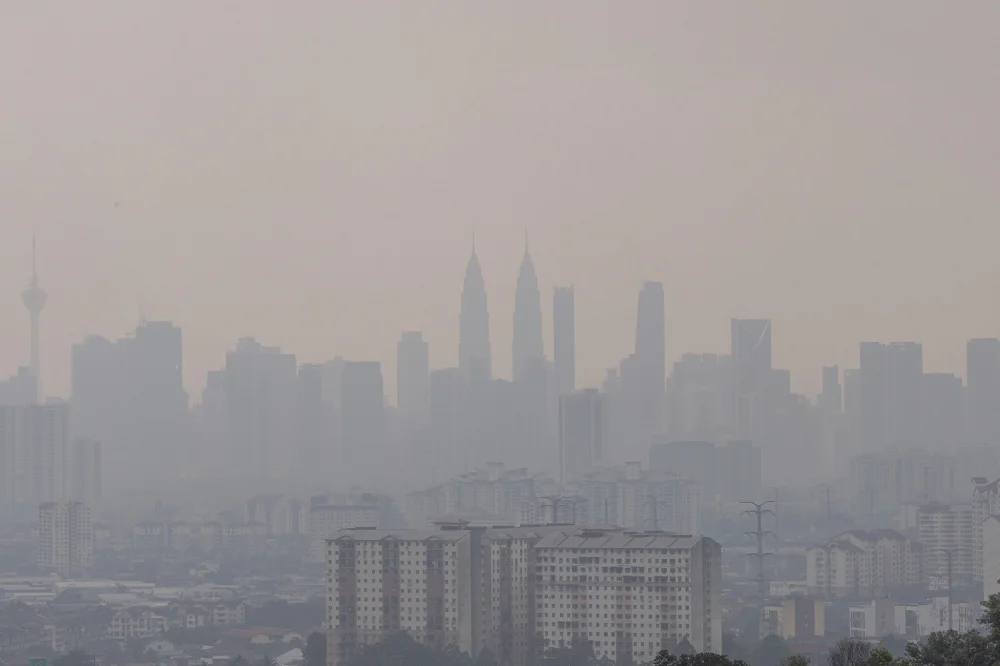
Unhealthy air quality spread across 16 areas in six Malaysian states by 24 August as thick haze from Indonesian fires pushed readings well above safe limits. Sarawak bore the worst of it, but Selangor, Kedah, and Penang also recorded Air Pollutant Index (API) levels above 100, the threshold for unhealthy air.
Data from the Air Pollutant Index Management System (APIMS) showed the Serian district police headquarters in Sarawak recording 194 as of 10am, nearing the very unhealthy category of 201. Other districts in the state hit 176 in Kuching, 172 in Samarahan, 158 in Sri Aman, and 125 in Bintulu. In Peninsular Malaysia, Malay Mail reported that Johan Setia in Selangor hit 160 while Sungai Petani in Kedah recorded 155.
Alor Setar in Kedah logged 152 and Minden in Penang registered 130. Kuala Selangor also crossed into unhealthy territory at 101. The readings covered 68 monitoring stations nationwide, with 58 additional areas recording moderate air quality. No station recorded good air quality.
The haze worsened through the afternoon. By 4pm, the number of areas with unhealthy API readings had risen to 16 across six states, NST reported, up from 10 areas in four states at 10am. An API reading between 101 and 200 is classified as unhealthy, 201 to 300 as very unhealthy, and above 300 as hazardous.
Health Minister Datuk Seri Dr Dzulkefly Ahmad said the ministry had recorded a sharp increase in asthma and upper respiratory tract infection cases as air quality deteriorated. The Kedah Health Department advised residents in Sungai Petani and Alor Setar to limit outdoor activities, citing the rising API readings in both areas.
Indonesian Ambassador to Malaysia Raden Datuk Mohammad Iman Hascarya Kusumo said his government was monitoring developments and taking measures to prevent, detect, control, and extinguish fires in fire-prone areas. Prolonged dry weather across the southern ASEAN region has driven an increase in hotspots and haze activity, with the El Nino phenomenon expected to strengthen over the coming months.
Sarawak has been the hardest-hit state throughout the current haze episode. On 22 August, 591 schools in the state were closed as air quality deteriorated. Childcare centres were directed to shut when API readings reached 200. The Department of Environment activated national haze action plans and stepped up enforcement against open burning.
The API is assessed hourly from 68 stations nationwide. Readings are published on the APIMS portal and through the MyEQMS application. Authorities have urged the public, especially children, the elderly, and those with respiratory conditions, to stay indoors when air quality is unhealthy.