
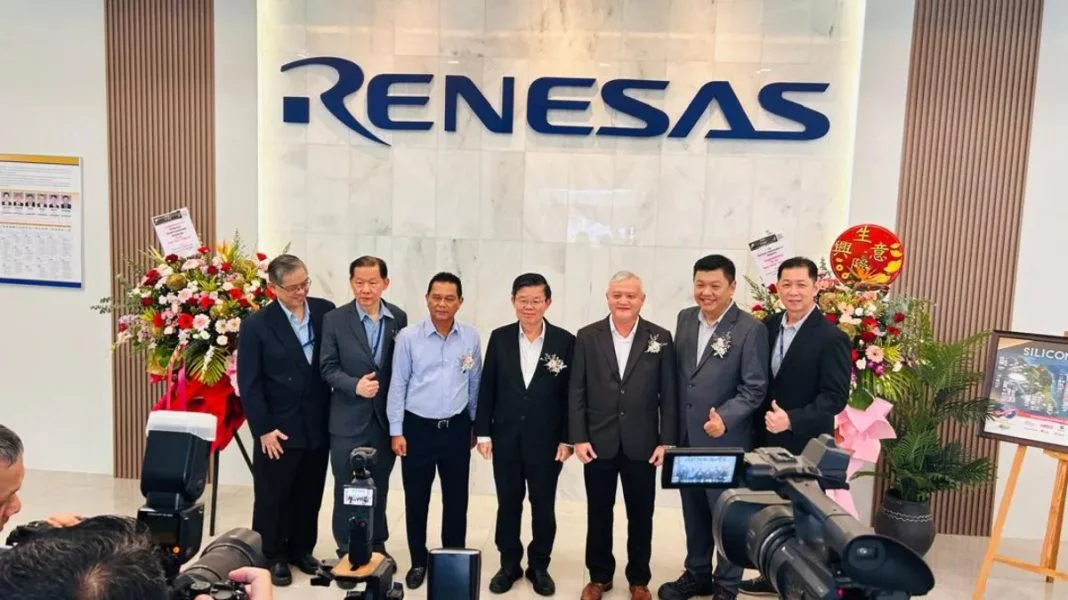
Renesas Semiconductor (Malaysia) Sdn Bhd has launched the second phase of its solar energy project at its Bayan Lepas facility, installing a building-integrated photovoltaics (BIPV) car park system expected to cut 720 tonnes of carbon dioxide emissions annually.
Penang Chief Minister Chow Kon Yeow officiated the launch, describing the project as a practical solution that makes full use of space while generating clean energy. The Sun Daily reported that the BIPV car park covers about 211 parking bays and adds 697 kilowatt-peak (kWp) of solar generation capacity. Construction began at the end of June and is expected to be completed by September.
The new installation builds on Renesas’ first-phase rooftop solar project, completed in the first quarter of 2026, which has an installed capacity of 3,152kWp and reduces carbon dioxide emissions by approximately 3,264 tonnes annually. Together, both phases give Renesas a total installed solar capacity of 3,849kWp, with a combined estimated annual reduction of 3,984 tonnes of CO₂ emissions, according to Pocket News.
Chow said the initiative reflected Renesas’ commitment to reducing energy consumption and integrating green practices into its daily operations, delivering both environmental and long-term economic value. He added that the state government remained committed to advancing renewable energy under the Penang2030 Vision through initiatives such as the Penang Energy Framework, and encouraged more companies to follow Renesas’ example.
Separately, vice-president and global head of Renesas internal manufacturing sites Ooi Heng Ee announced that the company plans to invest an additional RM480 million to expand its manufacturing capabilities for artificial intelligence-related products in Penang. The expansion is expected to create about 400 new jobs.
Ooi said the investment would strengthen Renesas Malaysia’s role within the company’s global manufacturing network, producing advanced automotive power devices, analogue mixed-signal integrated circuits and smart power products. The company is also modernising its operations through its Smart Factory initiative by leveraging automation, digitalisation, artificial intelligence and advanced analytics.