
Kuwait’s military said Iranian strikes hit a passenger terminal at its international airport on 3 JUNE, causing significant damage and wounding several people. The attack came as the US and Iran exchanged fresh missile and drone strikes, further jeopardising efforts to secure a new ceasefire agreement.
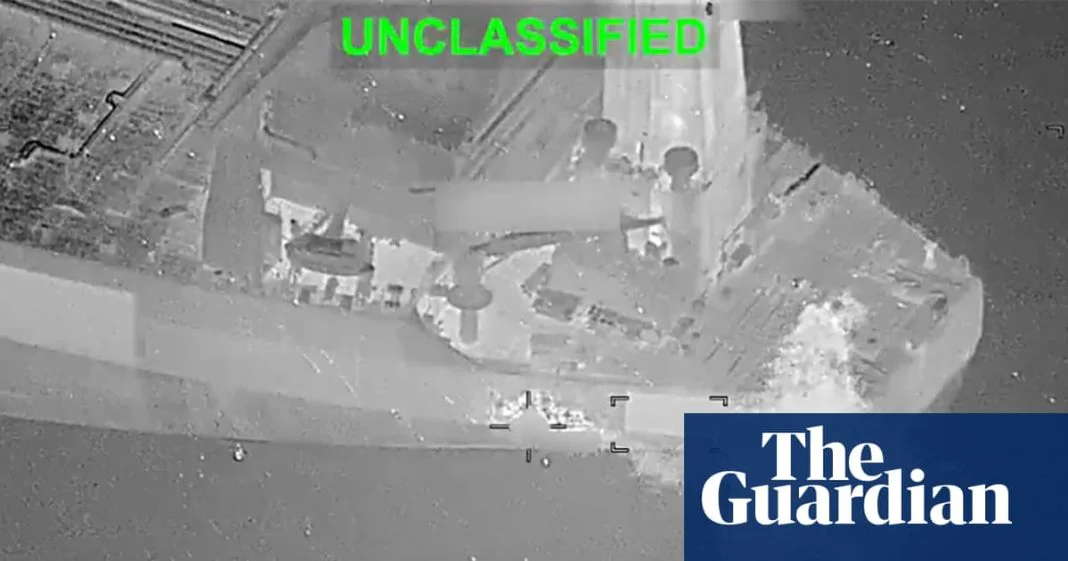
Overnight, US forces fired a Hellfire missile to disable a tanker attempting to break through the American blockade of the Strait of Hormuz on 2 JUNE. US Central Command (Centcom) said aircraft targeted the Botswana-flagged M/T Lexie as it passed through international waters toward Iran’s Kharg Island, north of the strait near Kuwait, after the crew ignored repeated warnings over a 24-hour period.
Iran carried out a drone strike on a passenger terminal at Kuwait international airport soon after, wounding several people and forcing air traffic to be suspended, Kuwaiti officials said.
Kuwaiti defence ministry spokesperson Brig Gen Saud Abdulaziz Al-Atwan described the attack as “criminal Iranian aggression which resulted in significant material damage to the building and injuries.” He did not say how many people were hurt but said those wounded had received medical care.
Kuwait’s state news agency said civil aviation authorities suspended traffic and transferred arriving flights to alternative airports after “terminal one came under Iranian attacks causing casualties and damage”.
US forces also shot down three one-way attack drones “launched by Iran toward civilian mariners that were rightfully transiting regional waters”. American forces conducted strikes on an Iranian military ground control station on Qeshm Island.
Iran’s Islamic Revolutionary Guards Corps (IRGC) said it attacked the US Fifth Fleet headquarters in Bahrain with missiles and drones in response to the Qeshm strike, a claim Centcom denied.
The IRGC said in a statement: “Late last night, the aggressive US military struck an Iranian oil tanker near the Strait of Hormuz with an aerial projectile, causing damage to the tanker’s engine room … these responses should serve as a lesson.”
The M/T Lexie is the sixth ship the US military has disabled since the blockade of Iran began on 13 APRIL. The US military said it had redirected 122 vessels seeking to enter or exit Iranian ports so far.
The exchange of strikes highlights the lack of political progress in resolving the crisis, despite upbeat claims by US Secretary of State Marco Rubio in his first appearance before the Senate foreign relations committee since the war on Iran began.
Rubio reiterated on 2 JUNE that a deal with Tehran was within reach, claiming the regime had agreed to negotiate aspects of its nuclear programme it had refused to discuss even a month ago.
His comments contrast with messaging from Iran, which indicated it would suspend peace talks with the US in protest against Israel’s offensive in Lebanon, threatening the collapse of negotiations with Washington.
Iranian Foreign Minister Abbas Araghchi said: “The ceasefire between Iran and the US is unequivocally a ceasefire on all fronts, including in Lebanon. Its violation on one front is a violation of the ceasefire on all fronts. The US and Israel are responsible for the consequences of any violation.”
Israeli warplanes launched dozens of strikes across southern Lebanon despite a new agreement brokered by US President Donald Trump aiming to bolster the ceasefire. On 3 JUNE, Lebanon’s state-run National News Agency reported 30 Israeli strikes across the south. Near Sidon, rescuers recovered the bodies of six members of the same family, including two children and a woman, after an Israeli strike.
Source: The Guardian