
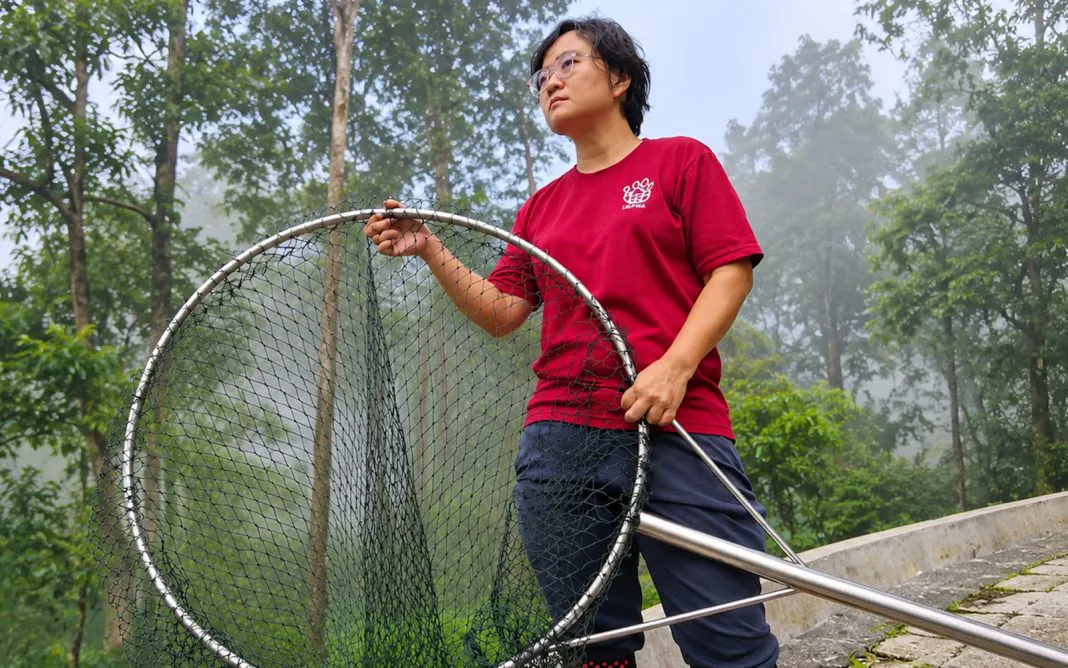
Puppies turning up in neighbourhoods where every dog has already been neutered are the clearest sign that abandonment still undercuts years of work to control Penang’s stray population, said Choong Koon Yean, president of International Aid for the Protection and Welfare of Animals (IAPWA) Penang. She told FMT that new arrivals can undo years of neutering in places where the numbers had been brought under control.
“They suddenly appear out of nowhere. You can see that they are in good condition, so they were probably just thrown out,” she said.
Her organisation has spent years promoting humane management of stray dogs, responding to reports of newly abandoned animals by trying to catch and neuter them. Abandonment remains a major challenge, alongside uncontrolled breeding on farms, construction sites and hard-to-reach areas.
The number of dogs neutered by IAPWA Penang has risen from 1,600 when FMT last spoke to her in 2020 to more than 9,000. The group has also found homes for over 1,200 dogs, and it has helped keep the Penang island city council’s no-kill policy in place for almost nine years.
Penang Island has not put down a stray dog since the council adopted trap-neuter-release in 2018, with 8,484 dogs neutered as of 17 May under the programme it runs with the group, Malay Mail reported. The council renewed the partnership for another five years in May and gave the group RM100,000 towards its running costs.
Choong measures progress by density rather than by estimates of the island’s total stray population. Her team surveys three hotspots every year, counting the dogs spotted per kilometre. On one route the figure fell from 2.57 dogs per km in 2019 to 0.69 in the latest survey, a drop of about 75%.
Fewer dogs in an area means fewer encounters between people and strays, which lowers the risk of conflict, disease and bite incidents, she said. Changing attitudes takes longer. Some farmers were reluctant to have their dogs neutered.
“One of them said it was hard to find puppies on the streets. They wanted to let their dogs breed because they wanted puppies,” Choong said. The group offered free neutering and urged the farmers to adopt from its shelter if they needed more dogs.
IAPWA Penang also handles residents’ complaints with the city council, investigating each one before accepting that the dogs must be removed. Choong said the cause sometimes lies elsewhere, in poorly managed rubbish areas or with feeders who leave food and containers behind.
“If you leave your rubbish area open, you will naturally attract strays, they will search for food resources,” she said.
Money remains the tightest constraint. Choong estimates the group needs at least RM70,000 a month to keep neutering about 100 dogs. IAPWA Penang has raised more than RM5 million since 2017, and the council covers the maintenance and utility costs of its operations centre and dog control centre.
The team has grown from Choong working alone to 16 paid and volunteer staff who handle catching, treatment, fundraising and adoption. “It’s practically my lifestyle, almost every waking hour is spent on this project, on this mission,” she said.
The pressure shows at times. “There are those who scold us for not being able to catch their dogs, saying we are useless,” she said. She prefers to dwell on cases such as an adopter who took in a paralysed dog with a broken spine and leg, paid for its surgery and treatment, and set aside a special space for it at home.
Choong argues that lasting change depends on policymakers treating animal welfare as a matter of human welfare too. “If we manage animal welfare, it benefits society as a whole, not just the animals,” she said.