
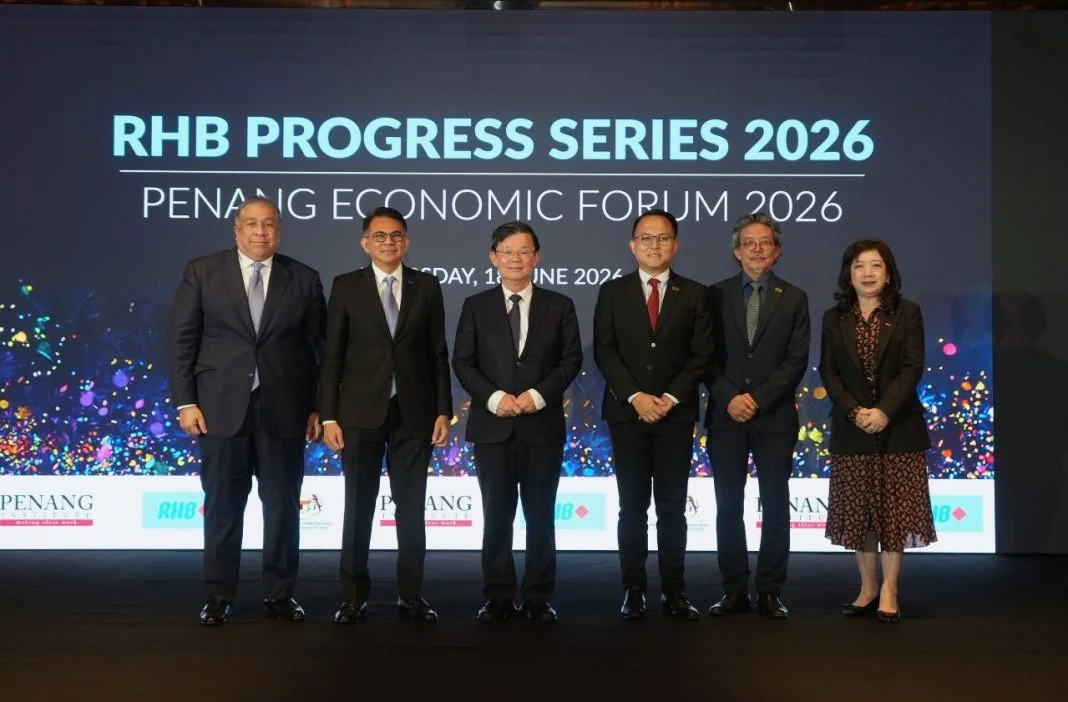
More than 300 participants gathered in Penang recently for the Penang Economic Forum 2026, a day-long event exploring how small and medium enterprises can drive the state’s next phase of economic growth. The forum, officiated by Chief Minister Chow Kon Yeow, brought together SMEs, mid-sized corporates, government representatives, financiers and capital markets players under one roof.
Jointly organised by RHB Banking Group, Penang Institute and the Ministry of Entrepreneur Development and Cooperatives, the forum centred on a single question: what does Penang’s next growth story look like, and who gets to write it?
The answer, by all accounts, lies with SMEs. Penang’s manufacturing base, expanding digital economy and entrenched entrepreneurial ecosystem give the state a strong starting position. But the forum made clear that turning that position into momentum requires new financing models, smarter supplier strategies and clearer pathways to public markets.
Dato’ Dr. Ooi Kee Beng, Executive Director of Penang Institute, pointed to the state’s depth of capability as a springboard. “Penang’s well-established manufacturing depth, growing digital economy and strong SME ecosystem lay the foundations for the state to capture new opportunities in an evolving global landscape,” he said. “Through this forum, we encourage the sharing of data-driven insights that help businesses make informed decisions and strengthen their resilience.”
RHB Banking Group, which has anchored the Penang business community for decades, framed the forum as a call for cross-sector collaboration. Dato’ Mohd Rashid Mohamad, Group Managing Director and Group CEO of RHB Banking Group, stressed that SMEs remain at the heart of Malaysia’s economic fabric. “As the economic landscape evolves, closer collaboration across the public and private sectors will be important to unlock opportunities and strengthen resilience, and SMEs remain central to this effort,” he said. “As a financial institution, RHB is focused on supporting businesses through access to financing, digital capabilities and advisory support to help them scale and compete.”
The forum featured a fireside chat titled Empowering the Entrepreneurial Ecosystem, with Minister of Entrepreneur and Cooperative Development Steven Sim Chee Keong discussing national strategies to strengthen Malaysia’s SME ecosystem.
Chow, in his officiating address, drew a direct line between SME health and economic resilience. “Without strong SMEs, there can be no strong economy. This is why the Penang State Government remains committed to ensuring that SMEs are not left behind in this period of global transformation,” he said. “While the challenges before us may be complex and evolving, Penang has always demonstrated resilience through unity and collaboration.”
The programme ran through panel discussions covering Malaysia’s economic outlook, sustainability-linked financing, strategies for SMEs to become preferred suppliers for multinational corporations, and pathways for Penang firms to transition into publicly listed entities. Speakers and panellists came from Bursa Malaysia, Ernst and Young Malaysia, SAMENTA, PBA Holdings Berhad, Coraza Berhad and other leading Penang-based companies.
The conversations returned to a common thread: Penang’s SMEs have the capability, but they need the right ecosystem to scale. That ecosystem depends on accessible financing, sustainable business practices and the confidence to pursue public market listings. The forum did not pretend these are easy steps. It did, however, make the case that the tools and partnerships are already in place, and that the next phase of Penang’s growth depends on businesses taking them.
Source: Penang Institute / RHB Banking Group