
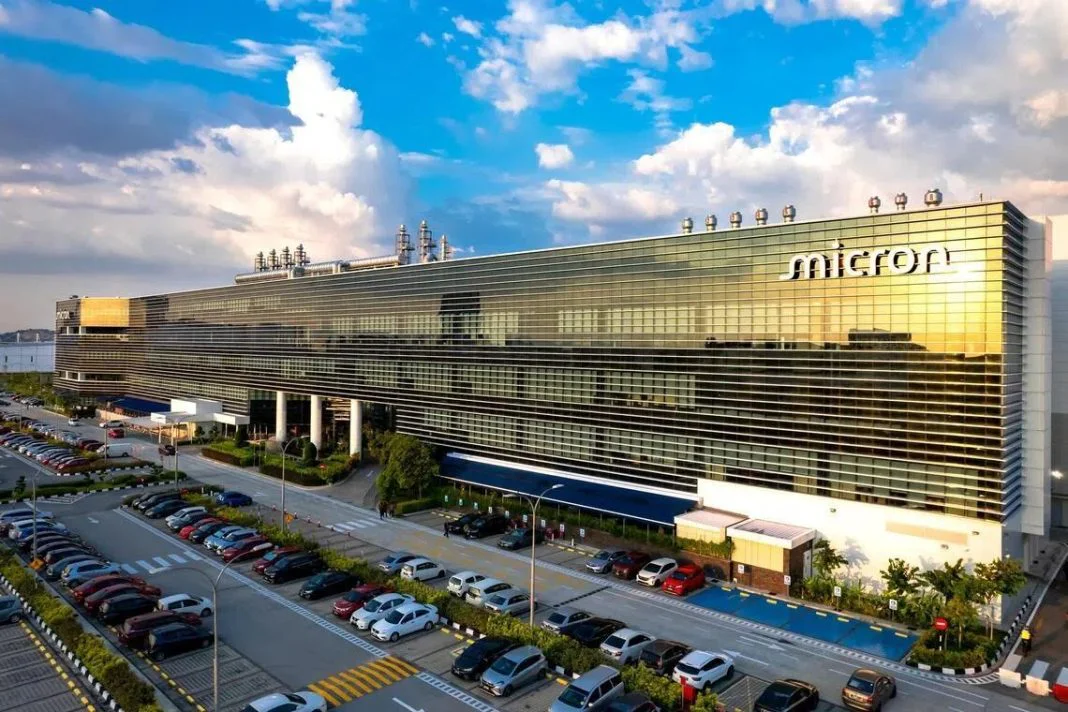
Penang’s electrical and electronics (E&E) sector is grappling with a capacity crunch as surging global demand for semiconductor products, fuelled by the artificial intelligence (AI) boom, overwhelms existing production lines across the state.
Penang recorded more than RM350 billion in E&E exports in the first half of 2026, an increase of more than 80 per cent compared with the same period last year, Chief Minister Chow Kon Yeow said in August. The state’s E&E exports consistently contribute more than 60 per cent of the nation’s total, reinforcing its position as Malaysia’s semiconductor hub, The Star reported.
“Penang’s strong semiconductor ecosystem has placed it in a strategic position to benefit from continued growth in the global semiconductor industry, which is expected to approach US$1 trillion in annual sales this year,” Chow said at the closing ceremony of the Netherlands-Southeast Asia Semiconductor Talent Programme 2026 at Universiti Sains Malaysia.
The capacity crunch is most visible at the company level. UWC, a Penang-based integrated engineering solutions provider, has seen its order books swell from below RM150 million in 2024 to RM250 million as at mid-2026, driven by AI-related demand, The Straits Times reported. “Anything to do with AI is doing very well now and memory is a big part of that,” UWC deputy chief executive Matin Ng told the newspaper. “The forecast numbers our customers are sharing show massive jumps to the point where we are offloading manufacturing to our local suppliers.”
Even rapid expansion has not been enough. UWC has had to train and support smaller suppliers in Penang to help meet rising demand, while also expanding into Perak and neighbouring Thailand. “You know the way Penang people do business? Very conservative and always net cash. Now I’m in negative cash because my order books have been picking up strongly but we are still looking into more expansion,” Ng said.
The strain extends across the industry. Malaysia Semiconductor Industry Association president Wong Siew Hai told The Straits Times that demand for high-bandwidth memory (HBM), an advanced chip used in AI systems, is so strong that new orders may not be fulfilled until 2028 unless more capacity comes online. “We don’t see this going away, there is nothing on the horizon that tells us this will end,” he said.
Micron, one of the world’s three largest memory makers, has expanded aggressively in Penang since 2018 with a footprint of over 145,000 square metres. The company has spent more than RM2 billion over five years building a local supplier network of more than 700 vendors, The Straits Times reported. Unisem, an assembly and test services provider, has grown its AI and data centre business from a single-digit share of sales before 2024 to nearly one-fifth today.
InvestPenang chief executive Datuk Loo Lee Lian said major players have brought their supply chains with them, deepening the supply network to the point where authorities must be “careful with what to bring in” to optimise land use. “If I have a project that says I want 100 acres of land and 20,000 direct labour, we have to be very careful with that. One of our big criteria is automation to reduce manpower requirements,” she told The Straits Times.
The talent shortage compounds the capacity constraints. Malaysia faces a shortfall of about 50,000 skilled engineers to meet current demand, while universities produce only around 5,000 engineering graduates annually, Chow noted. Globally, the semiconductor industry will need to add a million skilled workers by 2030, including more than 200,000 additional engineers in Asia-Pacific alone.
Penang’s approved manufacturing investments reached RM17.3 billion in the first half of 2026, a 38 per cent year-on-year increase, with expansion projects making up 69 per cent of the total, The Edge Malaysia reported. The strong investment performance was recorded despite ongoing geopolitical tensions, reflecting the resilience of the state’s established industrial base.
For Penang’s semiconductor industry, years of expansion driven by pandemic-era disruptions and shifting global supply chains have left it unusually well placed for the current boom. The question now is whether capacity, talent and infrastructure can keep pace with demand that shows no sign of slowing.