
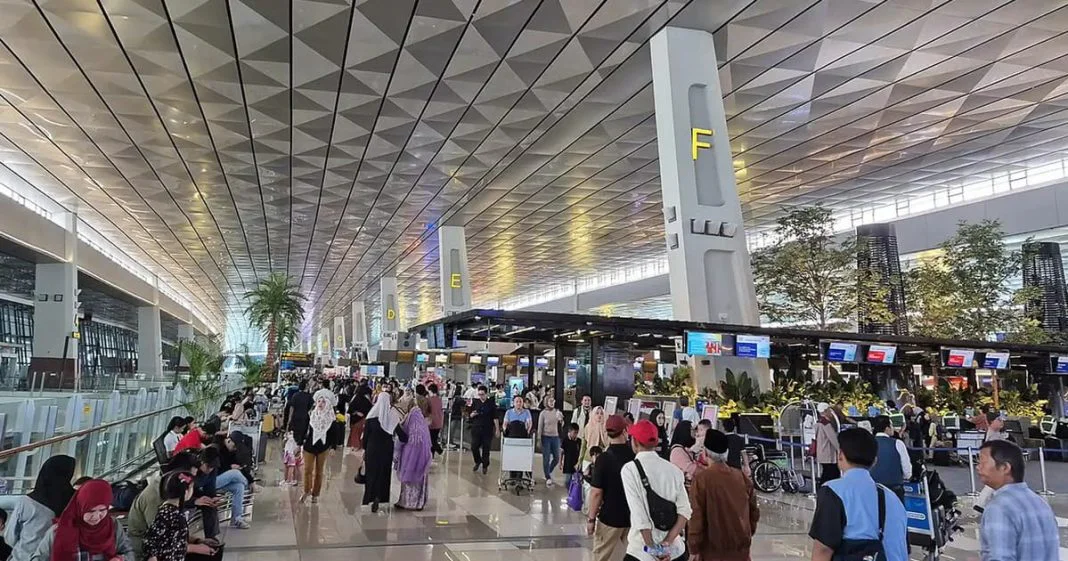
Three Malaysian women were arrested at Soekarno-Hatta International Airport in Jakarta on Monday (3 Aug) after customs officers found drugs hidden in their luggage, shoes and pockets.
The trio flew in from Kota Kinabalu, Sabah, and were acting suspiciously upon arrival at Terminal 2F, the Indonesian customs department said. Officers ordered additional checks, which uncovered substances believed to be cocaine, MDMA and ketamine concealed across their belongings.
The drugs were found in their luggage, purses, pockets, shoes and medicine packets.
Indonesian authorities seized 2.4g of powder believed to be cocaine, 8.4g of pills believed to contain MDMA, and 16.9g of rolled tobacco believed to have been mixed with ketamine.
Bukit Aman Narcotics Criminal Investigation Department director Hussein Omar Khan confirmed the arrests, identifying the suspects as Sabahans aged 30 to 39. Checks found that two of them had prior criminal records for drug offences and were known drug users, according to FMT, which cited Berita Harian and CNN Indonesia.
The women had travelled to Indonesia for a holiday and police believed the drugs were for personal use as the quantities were small.
“The arrest of these three women is found to be unrelated to the earlier cases involving the detention of a pilot and a 22-year-old man in Indonesia,” Hussein told Bernama on the Waspada programme on Bernama Radio, Malay Mail reported.
Hussein pointed to Malaysia’s geographical position as one of the factors making it a transit route for international drug trafficking syndicates.
“Most of these drug trafficking syndicates originate from countries north of Malaysia, and we become a transit route for them to move to Indonesia, Singapore, the Philippines and several other countries,” he said.
He added that the Royal Malaysia Police would tighten standard operating procedures at entry and exit points to prevent Malaysia from being “continuously labelled as a drug transit nation.”
The NCID seized 89 tonnes of various drugs nationwide last year. Enforcement has remained consistent into 2026, with nearly 46 tonnes seized in the first half of the year.