
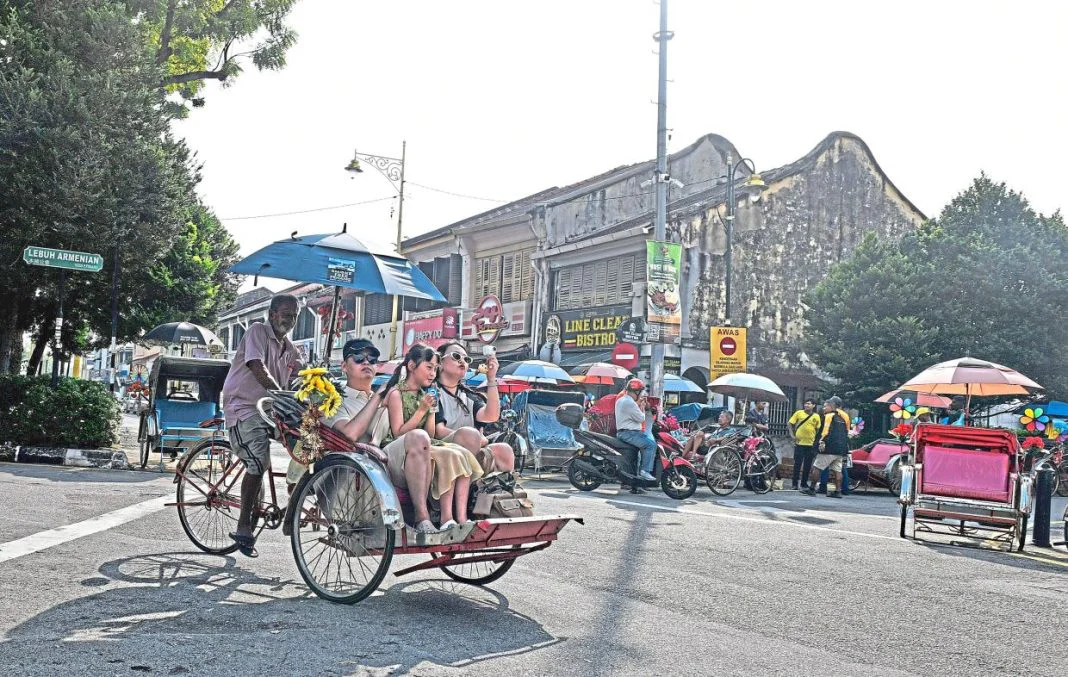
Despite the rise of e-hailing and modern transport, Penang’s trishaws are pedalling their way into a new chapter as a high-value tourism product. Veteran rider Chiko, 70, has spent more than four decades navigating the heritage streets of George Town, and he shows no sign of stopping.
The Penang-born Chinese rider speaks 16 languages, including English, French, Arabic, Tamil and Greek, a skill he picked up during six years as a seafarer before turning to trishaw riding. His ability to converse with tourists from across the globe has made him a familiar figure around Armenian Street within the Unesco World Heritage Site.
“Most of my customers are foreign tourists who specifically seek the experience of travelling by trishaw to enjoy the atmosphere of the heritage city up close,” Chiko told Bernama during a recent interview at Armenian Street. His busiest periods coincide with cruise ship arrivals, especially towards the end of the year, and he earns between RM80 and RM150 on good days.
According to NST (Bernama), trishaws have evolved from a common mode of local transport into a high-value tourism product. Licensed riders pay RM80 a month to rent a trishaw and must comply with road regulations, including avoiding one-way streets.
Fellow rider Zaiful Khamis, 33, said demand remains encouraging, especially during weekends, school holidays and cruise ship visits. “We have to comply with road regulations for the safety of our passengers. We also make sure to look after our customers well, including returning any belongings they accidentally leave behind,” he said.
Former chef Khoo Keng Boon, 60, turned to trishaw riding two years ago after struggling to find employment because of his age. He described the profession as his “last option” but one that still provides a livelihood. He now earns between RM50 and RM120 a day while taking tourists to landmarks such as Chew Jetty, Little India and the historic waterfront.
“Although the number of trishaw riders is declining, I believe this heritage vehicle still has a special place in Penang’s tourism industry because it offers an experience that modern transportation cannot replace,” Khoo said.
Beyond ferrying passengers, trishaw riders have also taken on the role of informal photographers, capturing memorable shots for visitors at popular spots such as the city’s heritage landmarks. The service adds value that goes well beyond a simple ride.
Penang Tourism and Creative Economy Committee chairman Wong Hon Wai said 92 registered trishaw riders continue to serve as the state’s mobile tourism ambassadors. Each rider receives a monthly allowance of RM200 from the state government to help preserve the traditional mode of transport.
“As of July this year, all 92 riders are officially registered through the Penang Island City Council’s uLesen licensing system, which covers both Trishaw Licences and Trishaw Rider Licences,” Wong said. He added that trishaws, introduced in George Town in 1941, remain one of Penang’s tourism icons and are promoted in Penang Global Tourism’s official guidebooks in multiple languages.
The state government also welcomes private sector cooperation, including hotels that help fund trishaw restoration and offer tour packages in collaboration with the Penang Trishaw Association. Wong said trishaw culture has the potential to be recognised as state heritage, and trishaws will be featured alongside other cultural elements in this year’s National Day Parade.