
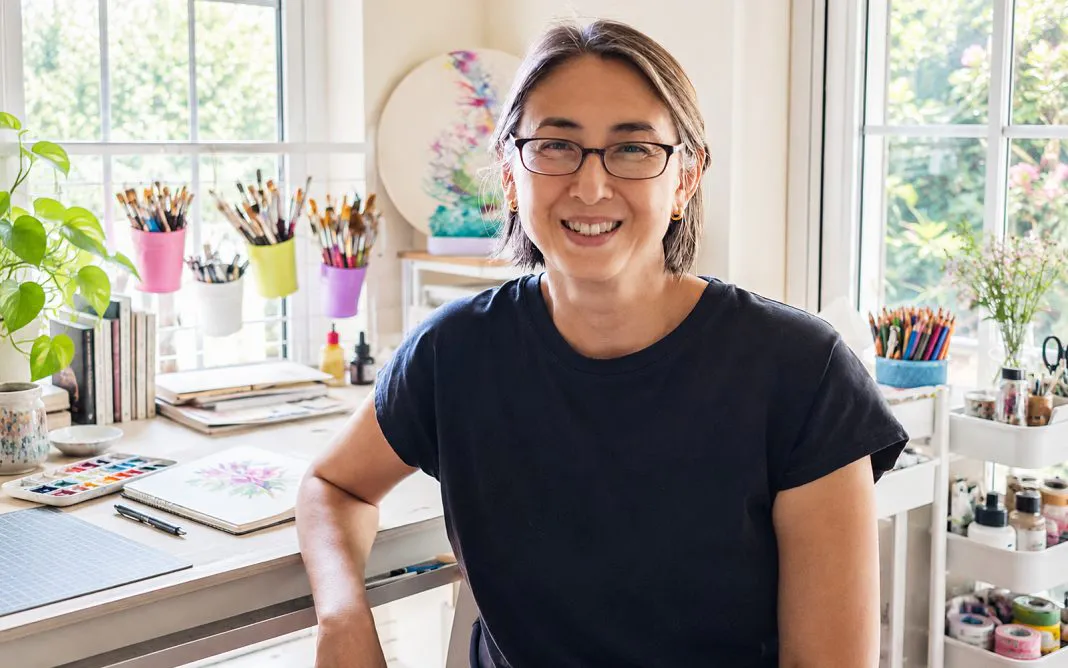
Esther Geh, 56, stepped away from full-time medicine in 2005 after a career in anaesthesiology and intensive care. Two decades later she spends her days studying leaves, flowers and fruits, painting Malaysia’s native plants in watercolour for audiences at home and abroad, FMT reported on 24 Nov.
Geh studied medicine in the United Kingdom before specialising in anaesthesiology and intensive care in Singapore. She returned to Penang and worked at Penang General Hospital, then left full-time practice to focus on her family.
She found her way back to art through regular sessions with fellow mothers whose children attended the same school. “I quickly realised that botanical illustration suited the way my brain works, probably because of my scientific background,” she said.
Her early studies covered plants found by the roadside, in gardens, on hills and in kampung settings. She works mainly in watercolour, turning to acrylics for outdoor commissions and adapting the medium to hold a similar effect.
Her paintings now sit in ‘Botany of Belonging: Forests of Southeast Asia’ at the Forest Learning Centre in Perdana Botanical Gardens, Kuala Lumpur, until 30 Nov. The free exhibition, which The Star noted opened on 25 Sept, gathers 45 botanical artists from Malaysia, Singapore, Indonesia, Vietnam, the Philippines, Thailand, Brunei and Japan, and shows more than 60 botanical artworks. It opens Fridays to Sundays, 10am to 4pm.
Geh is drawn to plants that carry cultural weight, whether for cooking, medicine or decoration. “Some of these plants are no longer familiar to younger generations. Through my work, I hope to bring awareness about where our food heritage comes from, including plants that are no longer commonly found in conventional cultivated gardens,” she said.
Okra, mushrooms, butterfly pea vines and leafy herbs fill her portfolio. Each painting begins with a live specimen, studied for structure, size and colour, then photographed from several angles as its growth stages are recorded. She works out the composition on layout paper before transferring the drawing to watercolour paper.
“By the time I start painting, I would already have spent weeks researching and studying the subject. Eventually, researching the plant became just as important as producing the final drawing or painting,” she said.
Her watercolour of durians, showing a whole oblong fruit, a rounder whole fruit and a split half with the yellow flesh and seeds exposed, was selected for the Society of Botanical Artists’ annual exhibition in London in 2016. She went on to create a colouring book for The Habitat Penang Hill in 2018, and has shown work in Taiwan, Bangkok and Singapore, as well as at the George Town Festival.
She remains largely self-taught. Recent commissions include a collaboration with Penang’s Michelin-starred Restaurant Au Jardin from December 2025 to January 2026, three paintings of fruit-bearing and flowering plants from a client’s garden, one for each of the client’s children, and permanent botanical works on a structural pillar at the Penang Hill Lower Station.
“If someone had asked me 10 years ago whether I imagined myself doing this, I would never have thought I would be where I am today,” she said.
She hopes the paintings push people to look more closely at the plants around them, and to see their place in the country’s natural and cultural heritage. Her work and updates are posted on her Facebook page.