
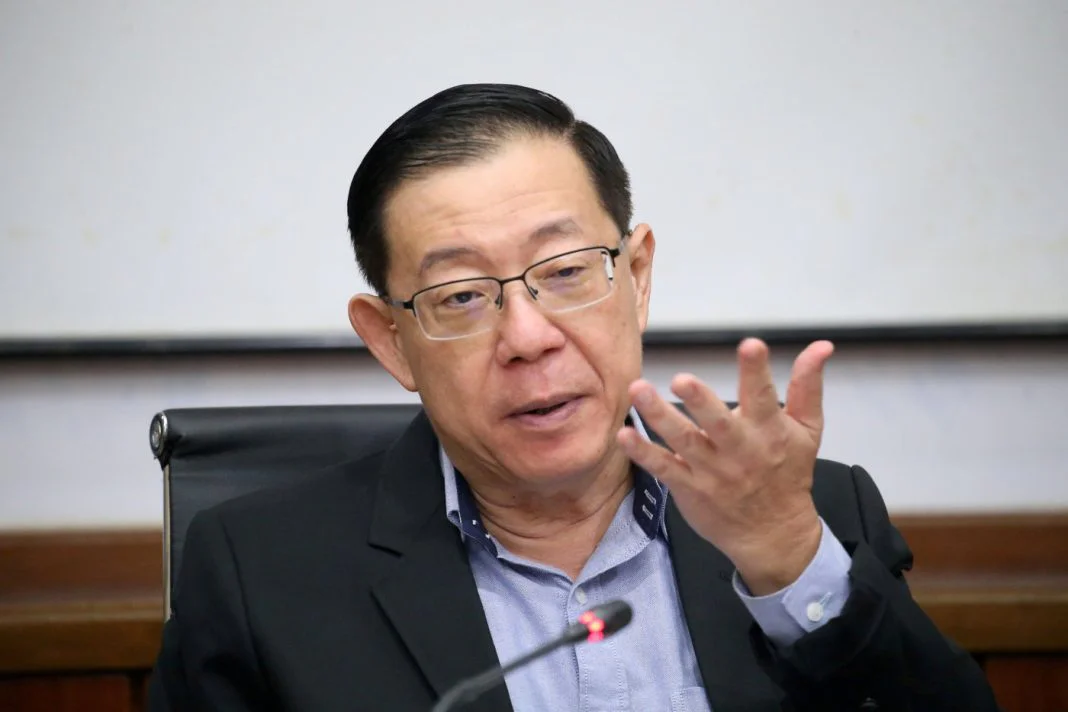
Bagan Member of Parliament Lim Guan Eng has written to Penang Chief Minister Chow Kon Yeow urging the state to postpone a 20 sen per cubic metre water tariff increase for one year, arguing that rising living costs and economic uncertainty make it the wrong time to burden consumers.
In a letter dated 1 July, Lim said the proposed hike from the current first-tier tariff of 62 sen per cubic metre would affect households and businesses already grappling with higher costs. According to NST Online, more than 80 per cent of Penang households would pay more for water under the revised tariffs, which took effect on 1 July.
State Infrastructure, Transport and Digital Committee chairman Zairil Khir Johari said households using 35 cubic metres of water a month would see an increase of up to RM2.55 under the new rates. Non-domestic consumers, including factories and commercial premises, face a 7.3 per cent tariff hike, translating to an extra RM77.70 for those using 500 cubic metres a month.
Lim argued that the additional RM20 million in annual revenue expected from the tariff increase would not significantly contribute towards the billions of ringgit required for water infrastructure development. He pointed to Penang Water Supply Corporation’s (PBAPP) improved financial performance, noting its profit before tax rose from RM23.1 million in the first quarter of 2025 to RM49.6 million in the corresponding period this year.
“If PBAPP urgently needs the additional RM20 million, the state government can apply for a federal grant or loan. There is no reason for the federal government to refuse such assistance,” Lim said.
However, Chow defended the tariff revision, saying the state had already deferred it for nearly a year after the Federal Government and the National Water Services Commission gazetted the new tariff on 30 July last year. As reported by The Star, Chow said the projects undertaken by the state and PBAPP involve close to RM2 billion, not including the multi-billion-ringgit agreement recently signed with Perak to secure additional raw water supplies.
Chow said the revised tariff was expected to generate only about RM20 million in additional annual revenue but stressed it remained crucial for financing infrastructure projects. He warned that without sufficient revenue, the state would need to borrow from banks, which could affect PBAPP’s credit rating and borrowing costs.
“Even though the domestic tariff has been revised, it still remains below the actual cost of producing and supplying treated water,” Chow added. PBAPP’s average cost of treating and distributing water stands at RM2.43 per cubic metre, while the revised first-tier domestic tariff for the first 20 cubic metres is 65 sen per cubic metre. The gap is subsidised by non-domestic users, namely industries and commercial businesses, which pay higher rates.
Penang’s average domestic tariff for the first 35 cubic metres of water after the revision is RM0.93 per cubic metre, still among the lowest in the country compared with the national average of RM1.12.